Conference Swag vs Real Merch — The Evolution of Tech Fashion
From those terrible XXXL free polos with vendor logos to actually wearing what you love. A look at how developer fashion grew up and why your conference swag drawer needs a intervention.
Let's talk about the elephant in the room at every tech conference: the swag bag. You know the one. A black nylon tote (great for groceries, terrible for anything else), a XXXL polo that looks like it was designed by someone who thought "business casual" meant "give up," and maybe a sticker or twelve because stickers are the one thing vendors got right.
We've all been there. Standing in a conference hallway, surrounded by 3,000 developers, and the only people wearing event merchandise are the volunteers. That's not a coincidence. That's a fashion statement.
The Dark Ages of Conference Fashion (2005-2015)
Remember when going to a tech conference meant leaving with more branded fabric than you knew what to do with? Those events had a simple philosophy: if it's logoed, it ships.pens. Notepads. Those little stress balls nobody asked for. And the holy grail — the polo shirt in sizes that only fit people who didn't write code for a living.
Actual conversation at a conference booth:
Them: "Want a free hoodie?"
You: "What size?"
Them: "It's one size fits all"
You: *eye twitch*
The uncomfortable truth is that early tech fashion was an afterthought. Companies were too busy shipping products to think about what developers actually wanted to wear. And let's be honest — most developers weren't thinking about fashion either. We were too busy optimizing SQL queries and arguing about tabs vs spaces.
But here's what happened: we got older. We got promotions. Some of us started companies. And suddenly, the question of "what do I wear to this meetup?" stopped being rhetorical.
The Rise of Developer Self-Expression
The turning point wasn't a single event. It was a gradual shift in how developers saw themselves — not as back-office code monkeys, but as the creative, influential people who actually build the products that run the world.
This is when brands like NERDMERCH entered the chat.
The github-parody tee is a perfect example. It's not just a shirt with a GitHub logo on it. It's a knowing wink to anyone who's spent 20 minutes crafting the perfect commit message at 2 AM. It's identification without explanation. When you see another developer wearing it, there's an instant connection that a branded XXXL polo from Salesforce Summit 2014 will never provide.
// The evolution of developer self-expression
const swag = {
  era: "dark ages",
  message: "I work at Company™",
  fit: "why is this sleeve so long",
  conversation_starter: false
const merch = {
era: "enlightenment",
message: "This is what I actually care about",
fit: "actually my size",
conversation_starter: true
};
`
What Makes Real Merch Different
Conference swag is about the vendor. Real merch is about you.
Think about the difference. When you wear a conference polo, you're essentially walking advertisement. You're saying "I attended this thing" or worse, "I work for this company." Neutral at best, desperate at worst.
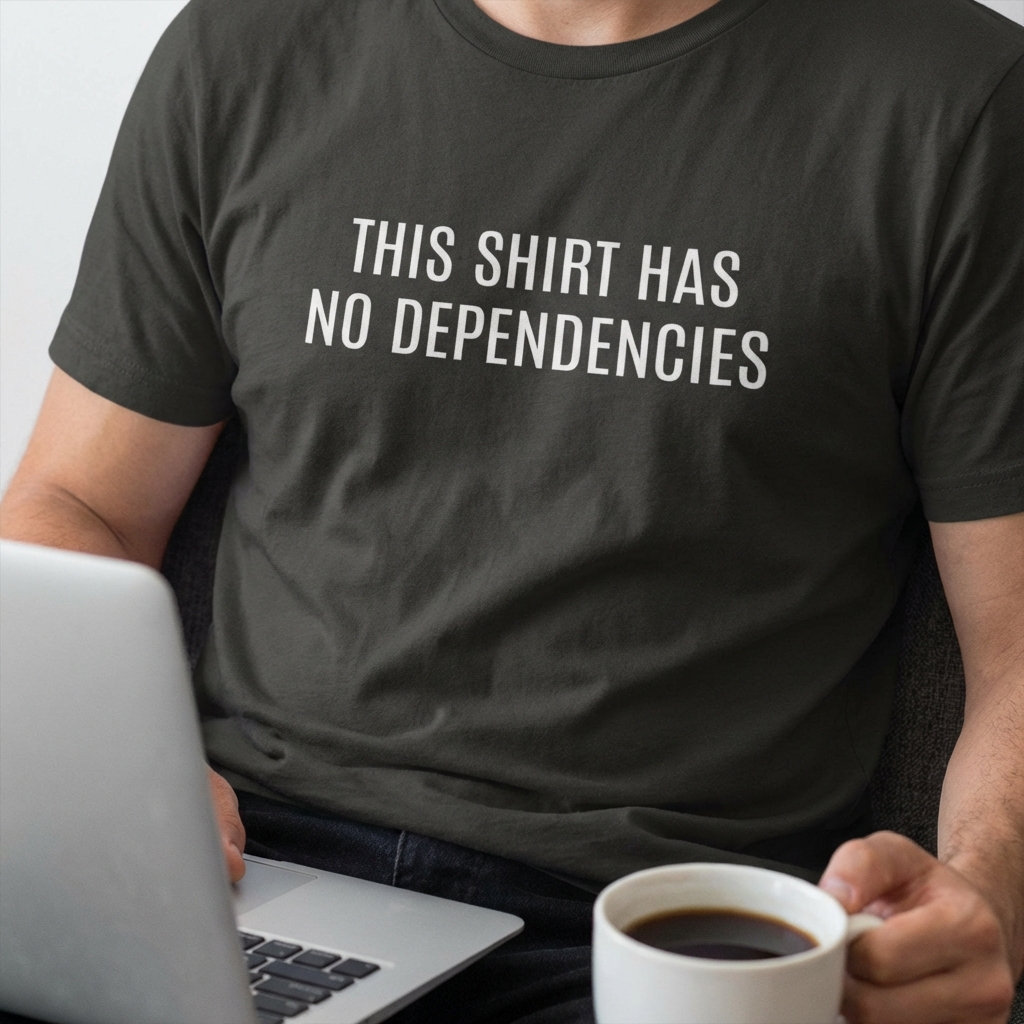
But when you throw on a no-dependencies tee? You're making a statement about your philosophy. You're telling the world that you appreciate elegance, simplicity, and the beautiful chaos of writing code that does exactly what it needs to do without pulling in 47 packages that each require 12 more. You're speaking in inside jokes that non-developers won't get — and that's the point.
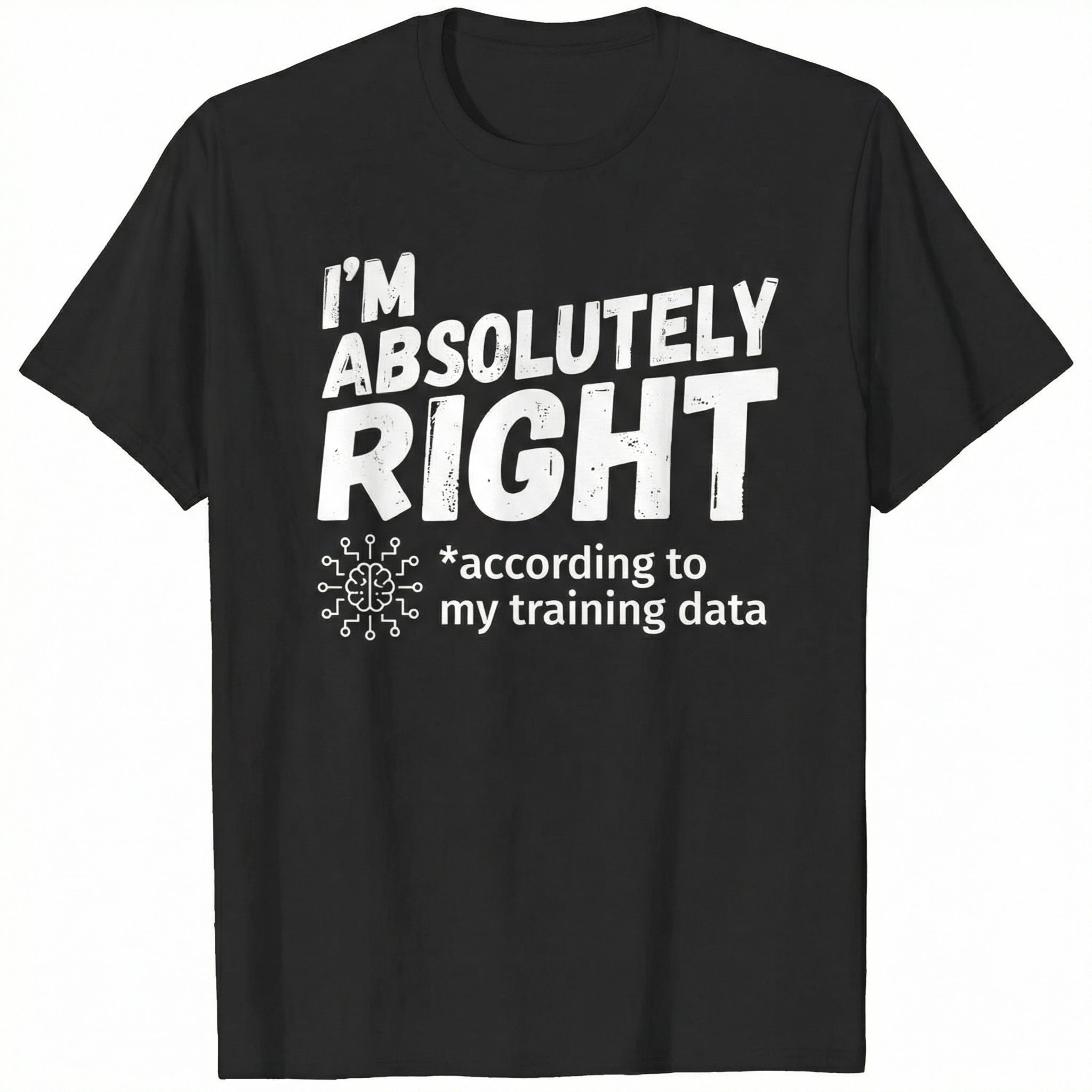
The im-absolutely-right design hits different too. We've all been in that meeting where someone is absolutely certain about a technical decision, and they're going to find out the hard way that they were not, in fact, absolutely right. It's that specific flavor of tech culture confidence that walks the line between legendary and catastrophic. Wearing it is like having a permanent smirk that says "I've seen this movie before."
The Meetup Effect
Something interesting happened as tech culture evolved. The conference swag model started dying not because swag got worse (it did), but because the alternative got so much better.
Now when I walk into a JavaScript meetup or a Rust hackathon, I don't see rows of vendor polos. I see a sea of personal statements. Someone's wearing a shirt with a cartoon satellite. Another person has a design that references a bug they spent three days hunting. A group in the corner is debating whether their matching im-absolutely-right tees are prophetic or ironic (answer: yes).
This shift matters for reasons beyond aesthetics. When you wear something that reflects your actual identity — not your employer's identity — you're signaling that you have opinions. That you have preferences. That you're not just a resource to be allocated, but a person with taste.
Where We Are Now
The tech fashion revolution isn't about expensive materials or limited drops (though NERDMERCH does put out some genuinely collectible stuff). It's about intention.
Conference swag says: "Here, take this and think of us." Real merch says: "This is who I am, and I chose it."
That's the evolution. From passive recipients of branded fabric to active curators of personal brand. From swag tables to independent designers. From "look at all this free stuff" to "look at all this personality."
Your conference swag drawer is lying to you. All those polos aren't assets — they're evidence of a time when we didn't know better. The new era is about wearing what you actually love, size that actually fits, and messages that actually mean something to you.
So the next time you're at a conference and someone offers you a free XL performance tee, smile politely and tell them you'd rather be wearing something that actually says something.
Your closet — and your self-expression — will thank you.
// Final verdict
if (swag.meaningful) {
  wear(swag);
} else {
  wear(merch.that.actually.matters);
}
P.S. The `no-dependencies` tee ships in actual human sizes. Just saying.