Creating the GitHub Parody Logo — Satire as Art
How we walked the line between homage and commentary with our most recognizable design, navigating the tricky waters of tech satire without ending up in legal hot water.
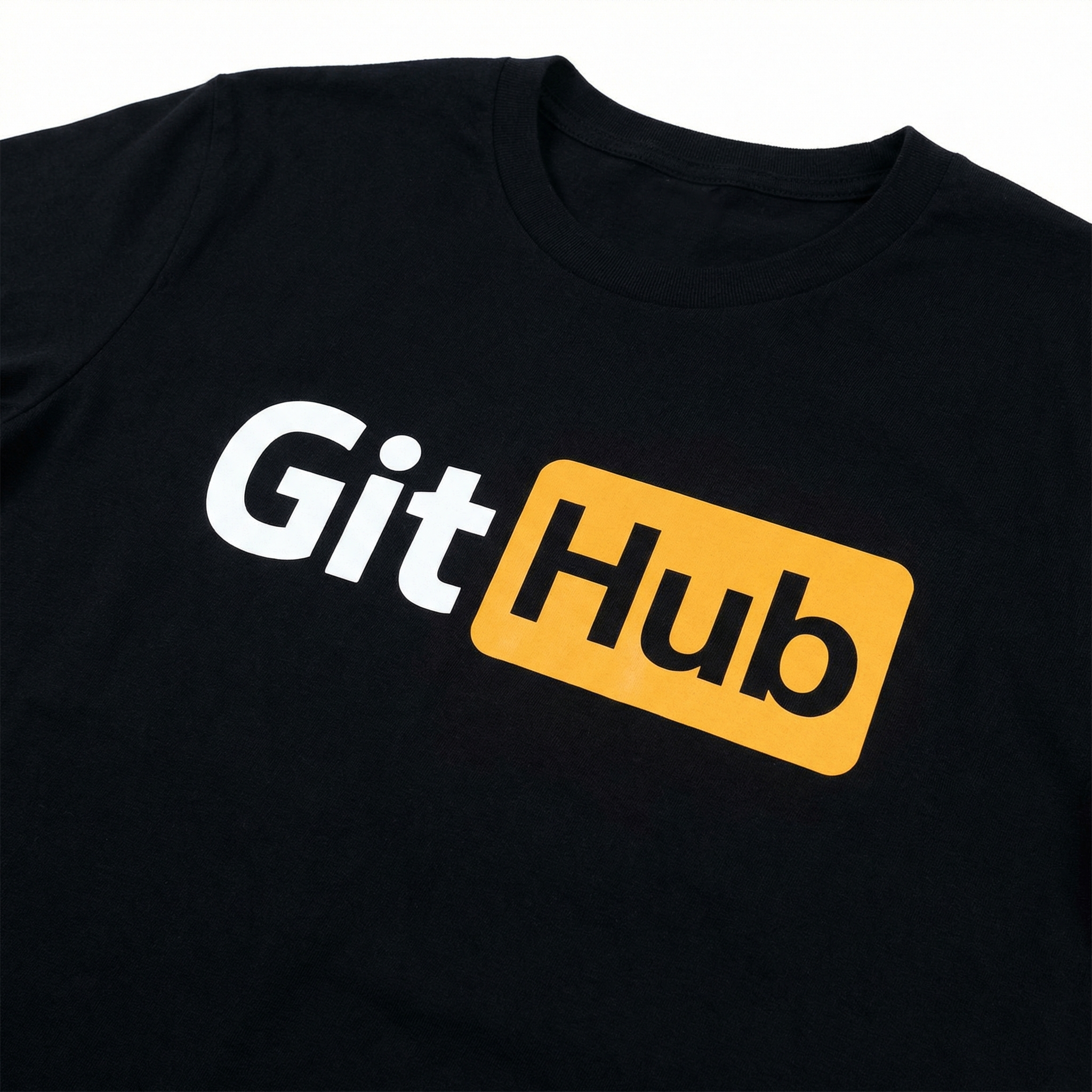
Every iconic logo carries weight. The Octocat has become synonymous with open source, with collaboration, with the very essence of how we build software together. When we decided to create our [github-parody] tee, we weren't just making another shirt — we were poking at something sacred. And that comes with responsibility.
The Spark: When Homage Becomes Commentary
It started with a Slack message at 11 PM: "What if we made a shirt that was basically GitHub but... not?" Classic brain fuel at NERDMERCH headquarters. We wanted to capture that feeling every developer knows — the love-hate relationship with version control. You git push seventeen times a day. You've seen more merge conflict resolution UIs than you'd care to admit. And yet, we genuinely can't imagine working without it.
The parody wasn't meant to mock GitHub. It was meant to celebrate the absurdity of how deeply it's woven into our daily lives. When something becomes that ubiquitous, satire isn't criticism — it's a form of flattery with a punchline.
We spent two weeks sketching. The challenge wasn't making something that looked like the GitHub logo. That part's easy. The challenge was making something that felt like the idea of GitHub — the institutional weight, the gravitas, the way it represents "serious business" to non-developers — while subverting just enough to make developers laugh.
Walking the Legal Line
Here's where things get interesting. Parody law in the US gives us some breathing room under fair use, but "some breathing room" isn't "unlimited runway." We consulted with our legal resources (shoutout to the lawyers who actually understand that code is creative expression).
The key principles we followed:
- Transform, don't copy — Our design needed to be clearly different at a glance
- Commentary, not competition — We weren't trying to replace GitHub or confuse consumers
- No trademark misuse — We never implied official affiliation or endorsement
Original GitHub logo elements:
- The Octocat silhouette
- Distinctive cat-ear shape
Our parody approach:
- Similar but distinct creature (we went with a more "chaotic" aesthetic)
- Changed silhouette proportions significantly
- Different color palette entirely
`
The result is something that triggers instant recognition — "oh it's THAT thing" — without crossing into territory that would make GitHub's legal team send a strongly-worded email.
Design Philosophy: The Art of the Nudge
The best tech satire works by exaggerating truth, not inventing lies. Our [github-parody] design leans into the slightly pretentious way developers talk about version control. You know the vibe — "I pushed to main" delivered with the gravity of "I signed the Declaration of Independence."
We gave our parody creature a slightly unhinged expression. The original Octocat is friendly, approachable, trustworthy. Our version has seen things. Too many git rebase -i gone wrong. Witnessed one too many "fixed" bugs multiply into twelve new ones.
The text treatment was crucial. We used a font that echoes GitHub's branding language without being identical — think "sibling" not "twin." The kerning, the weight, the slight letterform quirks — these details matter. Anyone who's spent time with bothlogos instantly sees the connection, but nobody would confuse them.
The Reaction: When Developers Get the Joke
We dropped the [github-parody] tee with minimal marketing. Just a quiet post, some targeted subreddits, a few Slack communities. Within 48 hours, it was our best-seller.
The comments told the real story. Developers weren't offended. They were delighted. "Finally, someone gets it," became the refrain. Someone on Hacker News called it "the most accurate representation of my relationship with version control I've ever seen on a shirt." High praise from a notoriously picky crowd.
What we learned: developers don't want to worship tech companies. They want to laugh at the systems they spend 40+ hours a week inside. The parody works because it's from the community for the community. We weren't outsiders making fun of developers — we were developers making fun of ourselves.
The Sequel Effect: When One Joke Becomes a Collection
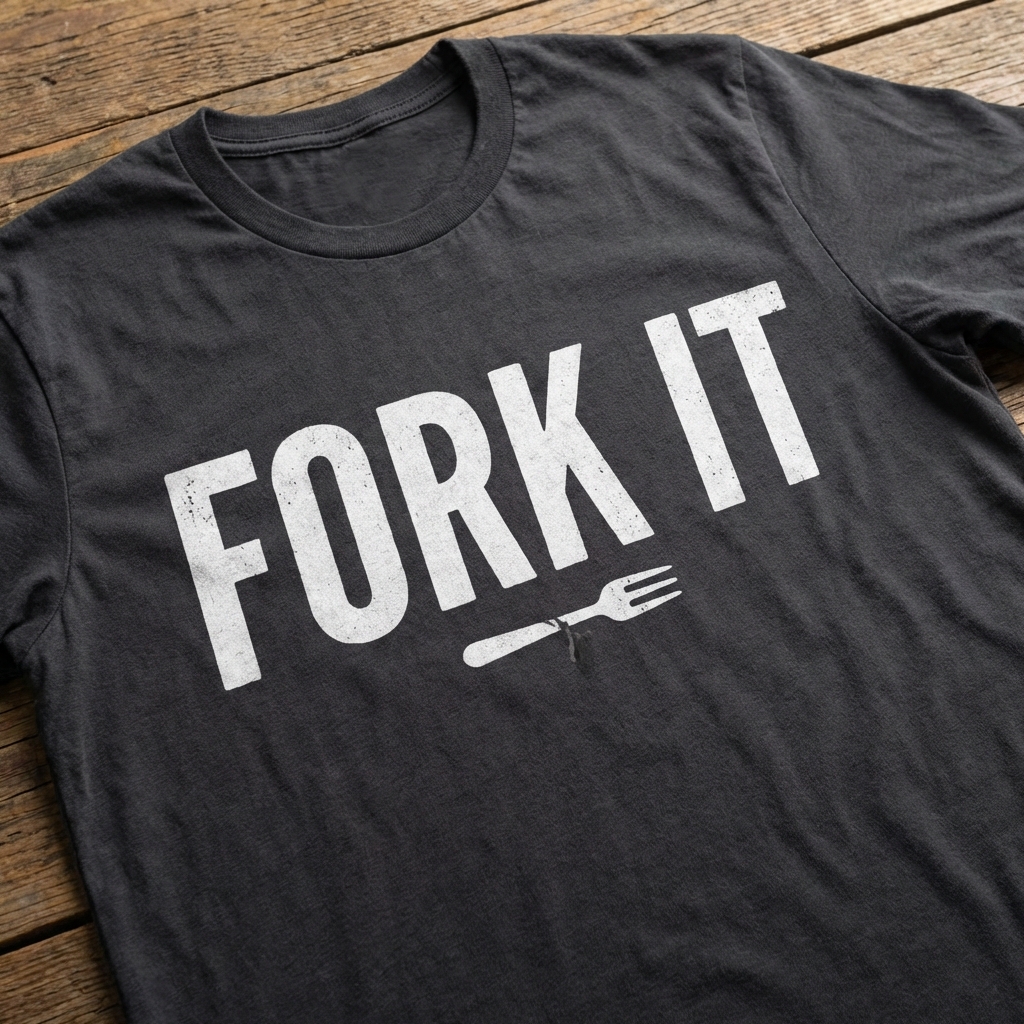
Success breeds ambition. After [github-parody], we started seeing other opportunities. The [fork-it] design emerged from the eternal question: what does it even mean to "fork" something in 2026? Is it collaboration? Competition? Digital gentrification? Our take leans into the absurdity — a fork that's definitely not going to merge back cleanly, because sometimes you just want to see the world burn (or build something weird without committee approval).
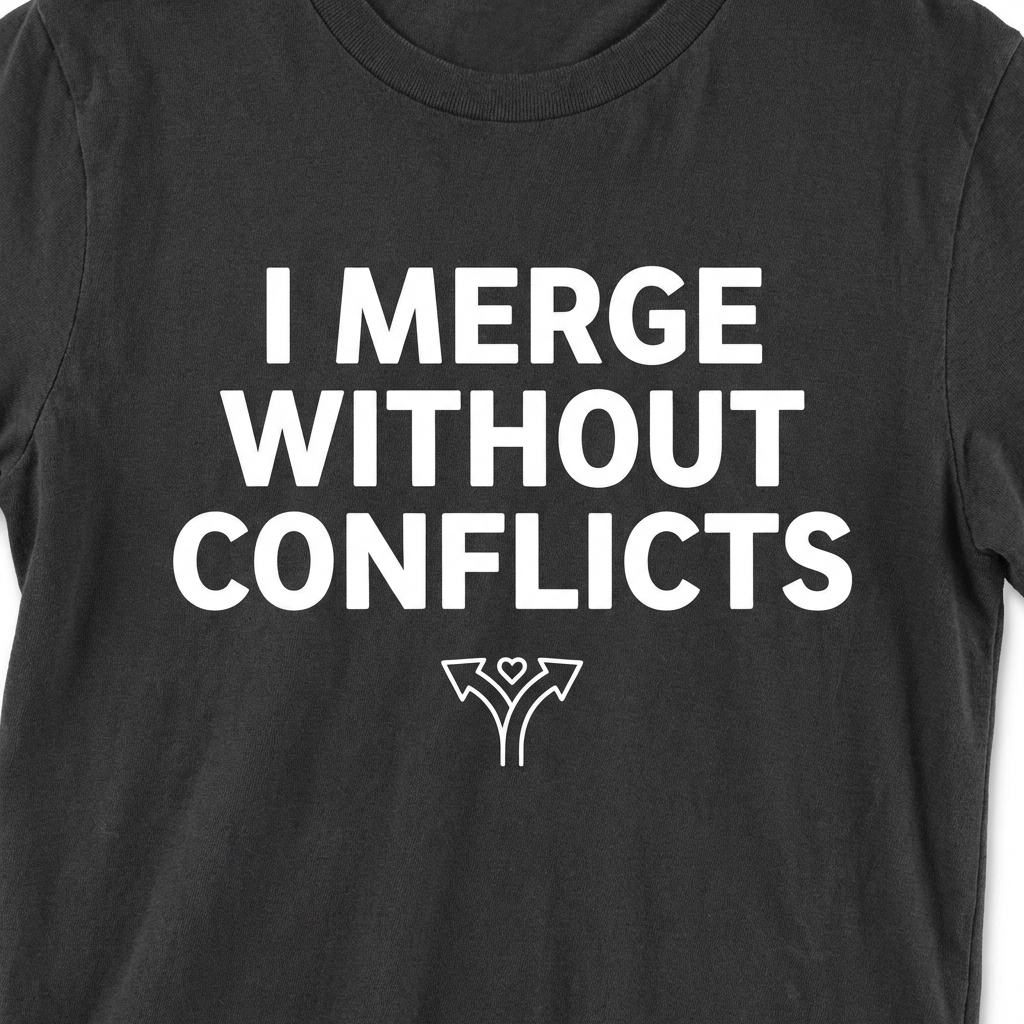
The [merge-no-conflicts] tee might be our most aspirational design. We've yet to meet a developer who's experienced this mythical state. The shirt features a serene landscape — rolling hills, a sunset, a cat that looks suspiciously like our parody mascot — because Merge No Conflicts is basically a fantasy at this point. A beautiful dream we chase with every git pull --rebase.
Why Satire Matters in Tech Merch
Here's the thing nobody talks about: tech workers are hungry for identity expression. We spend our days in hoodies and company t-shirts, writing code for products that have more legal pages than engineers. The chance to wear something that pokes fun at the very systems we build upon? That's powerful.
Good tech satire does three things:
- Validates shared experience — "Yes, I too have rage-committed at 2 AM"
- Creates community — Other wearers become instant conversation partners
- Maintains perspective — We built this stuff, and it's ridiculous, and that's okay
The [github-parody] design works because it doesn't punch down. It's not mocking people who use GitHub. It's not suggesting version control is stupid. It's laughing with the community at the beautiful absurdity of how seriously we take our tools.
That's the line we walked. That's why it worked.
If you want to wear your relationship with version control on your chest — literally — grab the [github-parody] tee before it sells out. We've got a waiting list that would make a tech startup proud. And if merge conflicts are your spirit animal, the [merge-no-conflicts] design is basically a participation trophy for surviving modern software development.
Now if you'll excuse me, I need to go resolve a conflict that just appeared in our main branch. Some things never change.