The Developer Dress Code — From Hoodies to Statement Tees
How Silicon Valley's rejection of the suit-and-tie created an entirely new definition of professional developer attire—and why your next conference talk outfit might just be a $20 tee from NERDMERCH.
The Casualty of the Tech Revolution
Somewhere in the late 1980s, a developer decided they didn't need to wear a tie to write code. That decision cascaded through decades, disrupted the entire concept of professional attire, and ultimately gave us the modern dev dress code: hoodies, jeans, and t-shirts with jokes only other developers understand.
The traditional office dress code died in server rooms and garages. What's replaced it is far more interesting.
When the tech industry blew up, it brought with it a radical premise: what you wear has absolutely nothing to do with what you can build. A developer in a three-piece suit isn't going to write better Python than one in sweatpants. The code doesn't care about your collar. And honestly, neither does anyone else on the team.
The Hoodie Era (And Why It Made Sense)
The hoodie became the unofficial uniform of developers for reasons that go beyond aesthetic. Early tech workers were spending 12+ hours a day in climate-controlled offices with aggressive AC. Hoodies provided warmth without the stuffiness of a blazer. They had pockets for headphones, USB drives, and the occasional vending machine snack. They hid coffee stains. They said "I'm here to work, not impress anyone."
The legendary Mark Zuckerberg gray hoodie became a symbol of this philosophy—not because he couldn't afford better, but because he had better things to spend his mental energy on. When you're debugging a production issue at 2 AM, choosing an outfit seems absurd.
But here's where the hoodie era started to run its course. Around 2015-2016, something shifted. The "techbro" look began to feel less like pragmatic choice and more like cultural identity crisis. Baggies and hoodies weren't just comfortable—they were a uniform that said "I belong here" in a very specific way.
And then came the statement tee.
When Your Shirt Becomes Your Stack Overflow
The developer community has always had a sense of humor about itself. We joke about our tools, our failures, and our collective inability to estimate project timelines. The statement tee just made that humor visible.
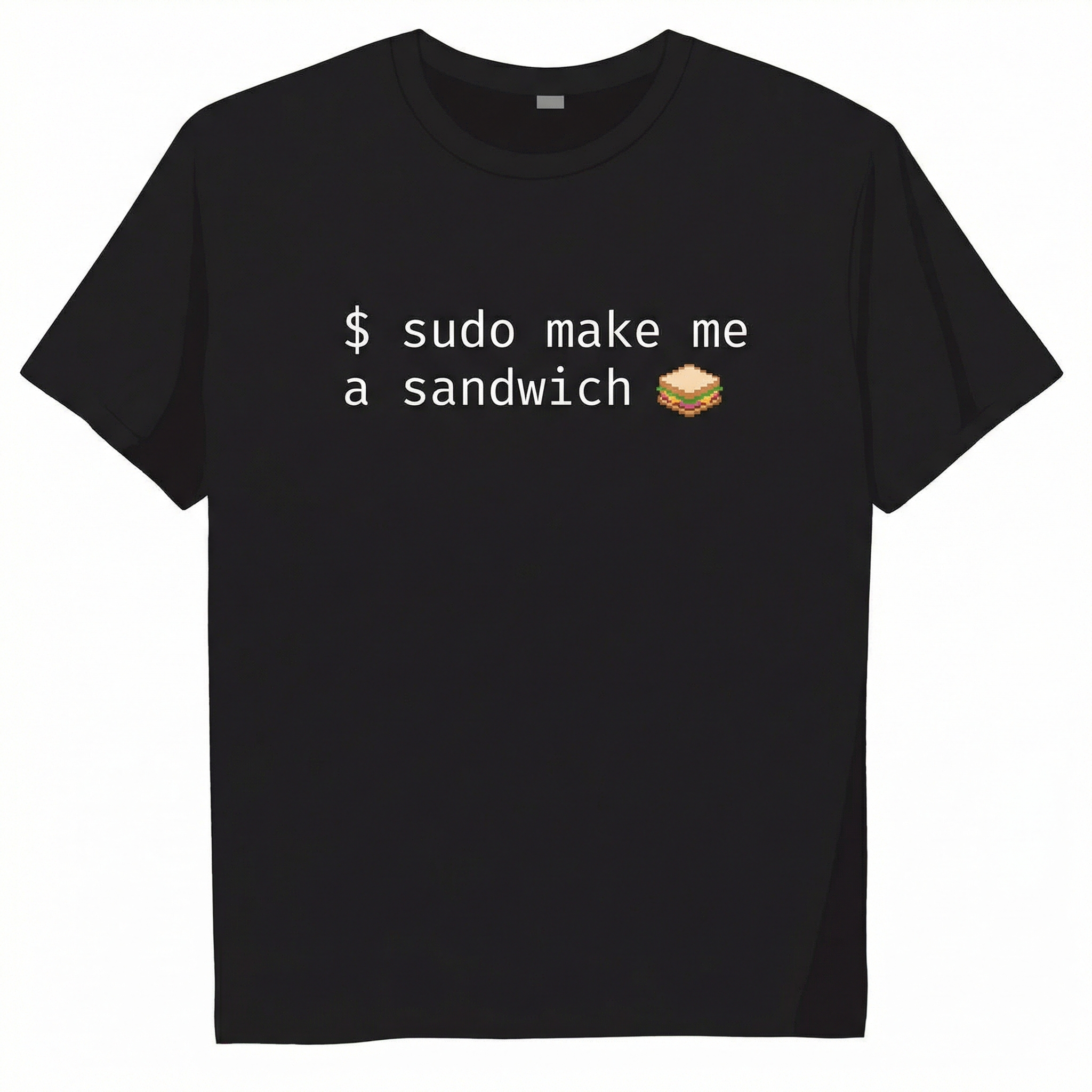
Enter NERDMERCH—brands that figured out developers don't want to just wear clothes; they want to wear inside jokes. When you see someone sporting a `sudo-sandwich` tee, you're looking at someone who either has sudo permissions on your server or wishes they did. When someone wears `works-on-my-machine` to a client meeting, they're announcing—loudly and proudly—that they've been in those trenches.
These shirts aren't just merchandise. They're conversation starters. They're identity markers. They're the dev equivalent of a motorcycle jacket in a biker bar: instant community recognition.
The power of the statement tee in developer culture comes from specificity. You can't explain the humor to someone outside the industry, and that's the point. A `fuck-it-ship-it` tee captures an entire philosophy of rapid deployment, MVP culture, and the beautiful chaos of moving fast. It's not just a shirt—it's a manifesto.
Traditional corporate: "Let's schedule a meeting to discuss the release strategy."
Dev culture: "Fuck it, ship it."
This isn't about recklessness. It's about a culture that learned that perfect is the enemy of shipped. And sometimes, you need a shirt to remind yourself (and your team) of that.
The New Professional
Here's the thing nobody talks about: the dev dress code has evolved to be genuinely inclusive. When your uniform is a hoodie and jeans, you're not excluding based on whether someone can afford dry cleaning or owns a blazer. The playing field is more level.
That said, "casual" comes with its own baggage. The tech industry has been rightfully criticized for how "casual" often meant "casual for people who already fit the mold." Developer culture at its worst created environments where, despite the lack of formal dress code, certain people still didn't feel like they belonged.
The rise of the statement tee actually helps here. A funny developer shirt isn't about looking a certain way—it's about thinking a certain way. It's about finding humor in the shared experiences of building software. `works-on-my-machine` doesn't care if you're wearing name-brand jeans or thrift store finds. It cares that you've experienced the specific pain of debugging something that only breaks in production.
What Actually Matters (It's Not the Shirt)
Let's be real: the most influential developers in the world have ranged from hoodies to hazmat suits. Linus Torvalds is famous for his... let's call it "distinctive" personal style. Richard Stallman probably hasn't worn "professional" attire since the Carter administration. And some of the most impactful code in history was written by people in literal pajamas.
The dress code conversation ultimately misses the point. What matters in developer culture isn't what you wear—it's the ethos behind it. The idea that your skills, your code, and your contributions matter more than your appearance. That you should be judged on what you ship, not what you iron.
That said, if you're going to wear a statement tee, make it a good one. Represent your industry with something that makes other developers laugh, think, or feel seen. Whether that's `sudo-sandwich`, `fuck-it-ship-it`, or `works-on-my-machine`—pick something that tells the world who you are without saying a word.
The developer dress code isn't about looking professional. It's about being authentic. And honestly? That's a lot more interesting than any suit could ever be.
Now if you'll excuse me, I have some code to ship. Preferably before someone asks me to estimate the timeline.