The Making of 'Dangerously Skip Permissions'
How a GitHub Copilot flag became the rallying cry for developers who've stopped asking permission and started shipping.
The Flag That Started It All
It started with a single line in a GitHub Copilot release note. Somewhere between "improved context understanding" and "better suggestion relevance," buried like a footnote in the API changelog, was a flag called --dangerously-skip-permissions. No documentation. No explanation. Just those two words that made every developer on the internet collectively raise an eyebrow.
Wait, Copilot had permissions? And you could skip them?
The的好奇心 was too strong. We had to know more. And what we found was hilarious, slightly terrifying, and deeply relatable all at once.
See, AI coding tools have gotten increasingly aggressive about "helping" us. They auto-import things we didn't ask for. They refactor code while we're mid-keystroke. They suggest entire functions with the confidence of a senior engineer who's never met our codebase. And increasingly, they're asking us things like "Shall I run this shell command?" or "This accesses your file system—proceed?"
The --dangerously-skip-permissions flag was Copilot's backdoor around its own safety guardrails. A bypass for the bypass. And it perfectly captured something the developer community has been feeling: we're tired of being interrupted.
When Did We Stop Reading Warnings?
Here's a fun exercise: close your eyes and recall the last ten permission dialogs you've clicked through. Can't do it, can you? Neither can we.
This is the state of modern development. We've become so conditioned to dismiss warnings that when something actually important pops up, we're already on autopilot. Click. Accept. Allow. Skip. Yolo.
This behavior isn't new—it's just that the cowboy coding culture of the early 2000s finally has a flag named after it. Remember running sudo before commands you probably shouldn't have executed? Or that time you chmod 777'd something in production at 2 AM because permissions were "being annoying"?
We didn't invent this energy. We just gave it a flag name.
The dangerously-skip-permissions flag went viral not because it's a good idea, but because it validates something we've all been doing for years. It's GitHub Copilot admitting that yes, sometimes the safety features get in the way, and yes, sometimes you just need to ship.
The Psychology of the Override
Let's get slightly nerdy for a second. There's a concept in UX called "habituation"—when a stimulus becomes so familiar that we stop responding to it meaningfully. Permission dialogs are designed for habituation. They want you to click "Allow" without thinking. Same with those Terms of Service checkboxes. Same with that "I understand the risks" button that appears before you do something monumentally stupid.
AI tooling flags like --dangerously-skip-permissions are the ultimate expression of developer pragmatism: we've internalized the warnings, we've assessed the risks, and we're choosing velocity over validation.
Is it always the right call? Absolutely not. But neither is spending four hours trying to figure out why your AI assistant won't let you delete a file it just created with the wrong permissions. Sometimes you just need to run:
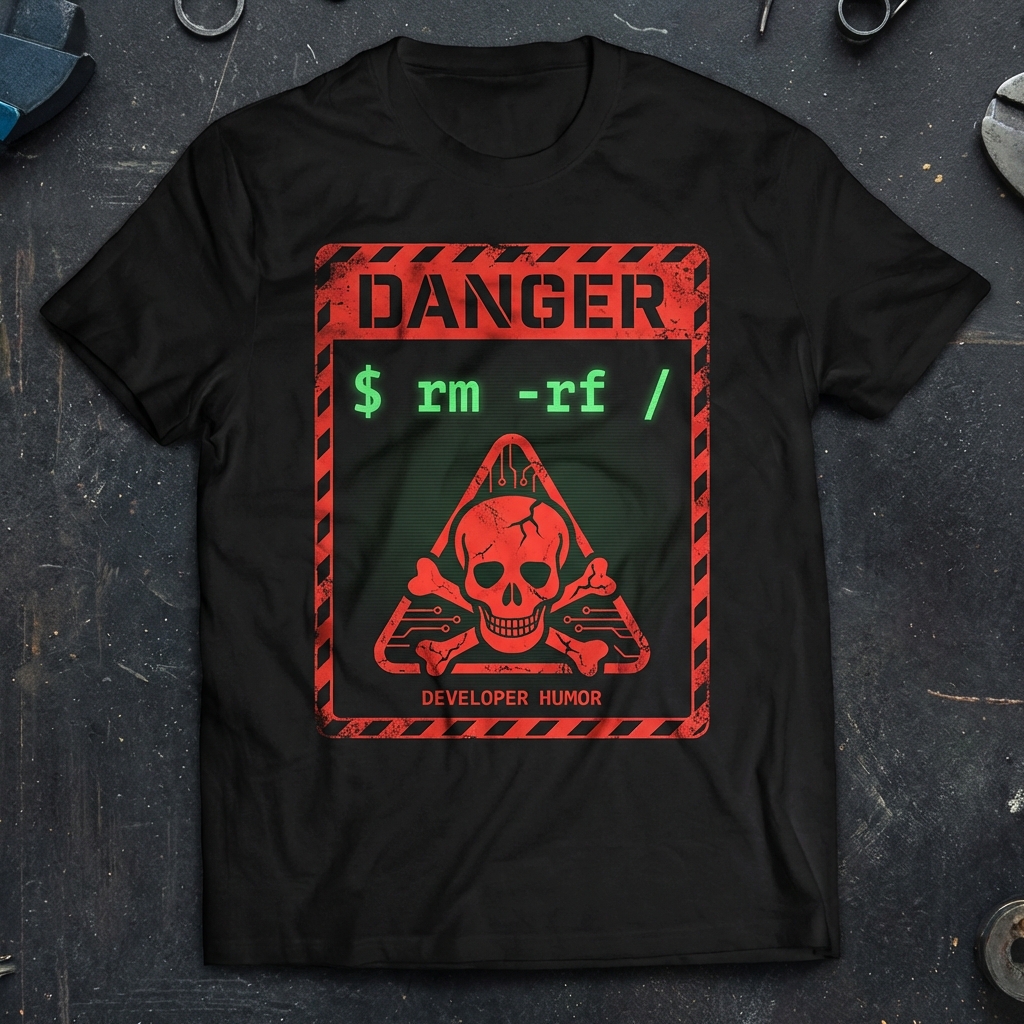
rm -rf ./that-one-folderAnd yes, we have a shirt for that energy too: the rm-rf-danger design. It's for the moments when you've done the mental risk assessment, accepted the consequences, and are ready to move on with your life.
The irony isn't lost on us. We're wearing our reckless abandon on our chests while also advocating for thoughtful development practices. But here's the thing: the best developers we know have a finely calibrated "probably fine" meter, and they're not afraid to trust it.
Shipping at the Speed of Trust
Here's what the --dangerously-skip-permissions conversation is really about: trust. Trust in your own judgment. Trust in your team. Trust that the five-minute hack won't become a five-hour incident. Trust that you'll catch the bug before production catches you.
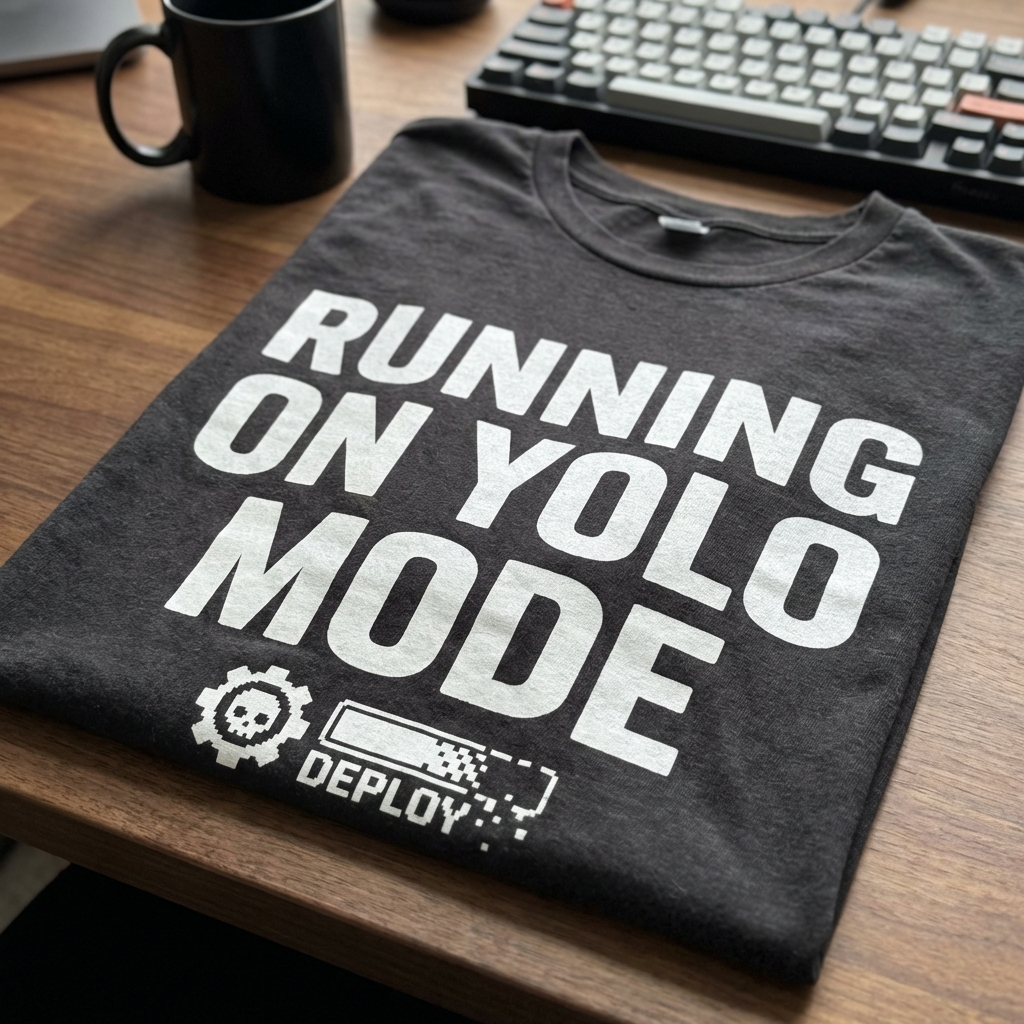
This is why our yolo-mode shirt has become one of our bestsellers. It's not about being careless—it's about the calculated confidence that comes from years of experience. You know the risks. You've weighed them. You're choosing speed because speed matters, and perfect is the enemy of shipped.
The best engineers we've worked with aren't reckless. They're decisive. They read the warnings, understand the implications, and make informed choices quickly. When Copilot asks if it should run that shell script, they're not clicking "Yes" blindly—they're clicking "Yes" because they've already assessed what it does, what could go wrong, and why the benefit outweighs the risk in this specific context.
That's what the dangerously-skip-permissions flag represents to us: informed consent with the safety wheels off. It's not ignorance—it's expertise expressing itself as velocity.
Wear It Proud
So here's to the developers who read the documentation (eventually), understand the implications (usually), and know when to reach for the override. You're not reckless. You're experienced. And now you've got a shirt that says exactly that.
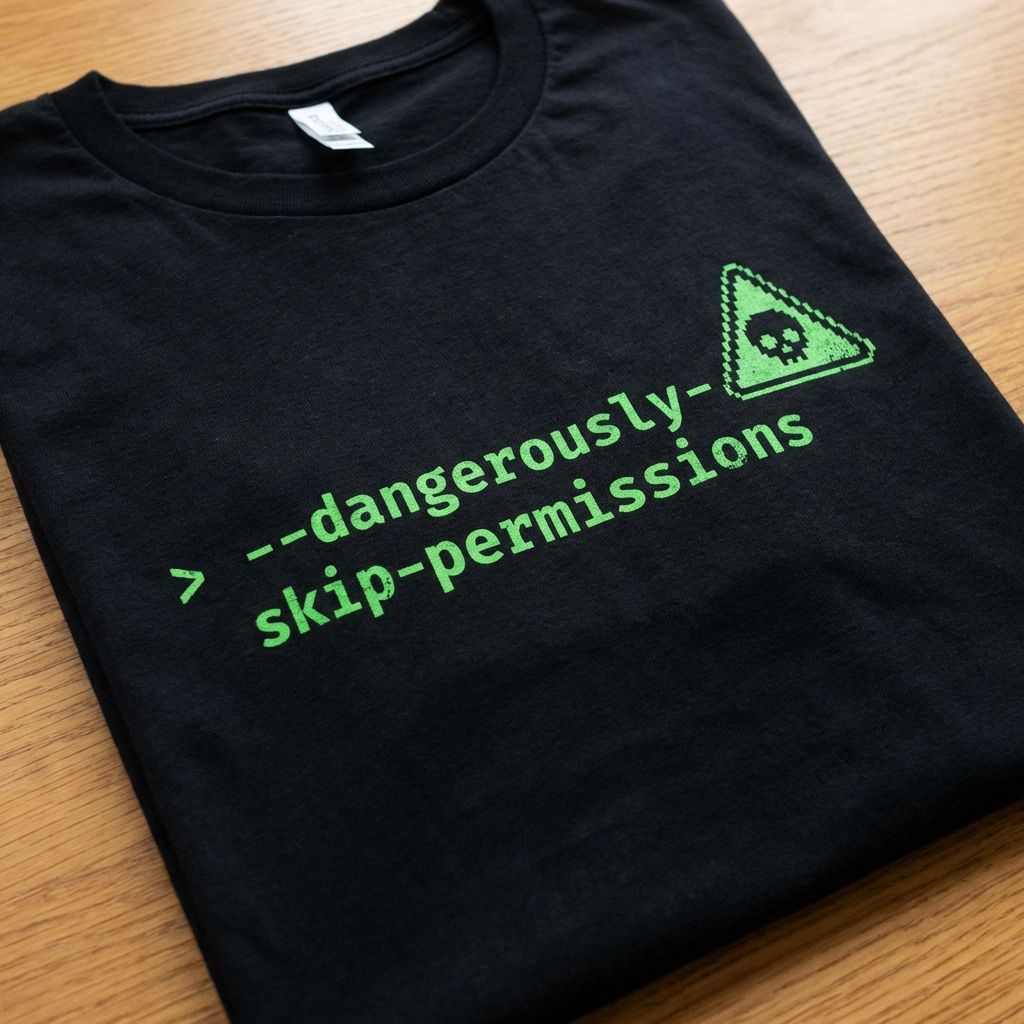
The dangerously-skip-permissions tee is for the ones who understand that some flags exist for a reason, and that reason is to be deliberately, intentionally, dangerously ignored.
We made it because we saw a flag that made the community laugh, nod, and feel seen. We made it because it captures that beautiful tension between "probably shouldn't do this" and "I'm doing it anyway." We made it because every developer knows the exact moment they decided to skip the permissions check, and they deserve to rep that moment with pride.
Now if you'll excuse us, we've got a --dangerously-skip-permissions flag to go use. Responsibly. Probably.
gh copilot suggest --dangerously-skip-permissions "ship it"YOLO.