The Psychology of Code Humor — Why Developers Need to Laugh
From merge conflicts to production outages, developers live in a constant state of tension. Here's why the best code shops run on caffeine, dark humor, and a healthy dose of 'fuck it, ship it' energy.
Let's be honest: writing software is weird. We sit in chairs for eight to twelve hours a day, staring at symbols on a screen that somehow represent business logic, and we call it a profession. We're asked to estimate how long vague problems will take to solve, given incomplete information, with technologies we haven't fully learned yet. And when things go wrong — and they always go wrong — we're the ones blamed.
No wonder we developed a sense of humor about it.
The Pressure Cooker Nobody Talks About
Here's the thing nobody tells you before you become a developer: the mental load is relentless. You're not just writing code; you're holding entire architectures in your head, tracking dependencies, remembering why you made that decision six months ago, and predicting how a change in one place might break something in a completely different place. The cognitive overhead is staggering.
Stack Overflow: Where your question has already been asked and answered by someone
who was also desperate at 2am but still had the energy to create an account.
This constant mental pressure creates a need for release valves. Humor — especially dark, self-deprecating humor about our collective struggles — functions as social glue and stress relief simultaneously. When someone posts a meme about merge conflicts, it's not just funny. It's a signal: "I understand. I've been there. We're in this together."
Why Humor Isn't Just permitted — It's Essential
The research on stress and creativity is clear: moderate stress can improve problem-solving, but chronic high stress destroys it. Developers who find ways to laugh at their work maintain better cognitive flexibility, recover faster from setbacks, and report higher job satisfaction.
Consider the humble git merge. Anyone who's worked on a team larger than three people has experienced the joy of:
$ git merge feature-branch
Auto-merging src/app.js
CONFLICT (content): Merge conflict in src/app.js
Automatic merge failed; fix conflicts and then commit the result.
You stare at the conflict markers:
`
<<<<<< HEAD
const user = await getUserById(userId);
=======
const user = await fetchUser(userId);
>>>>>>> feature-branch
`
Which one is right? Both? Neither? The person who wrote the feature branch is on vacation. Of course they are.
Humor about situations like this doesn't just make us feel better — it reframes the situation. A merge conflict becomes a funny story instead of a personal failure. A production outage becomes "a learning experience" instead of proof that you're incompetent. This reframe is psychologically protective.
The Shared Language of Inside Jokes
There's a reason inside jokes spread so fast in engineering culture. When you see someone wearing a shirt that says fuck-it-ship-it, you immediately know something about them. They've shipped code at 11pm. They've pushed to production on a Friday and hoped for the best. They've learned that perfection is the enemy of progress — and that sometimes you need to just throw caution to the wind and hit deploy.
These shared references create in-group belonging. They say: "I get the jokes because I live the jokes." For a profession that often feels misunderstood by the outside world, this validation matters more than we admit.
Terminal Illness and the Beauty of Literal Humor
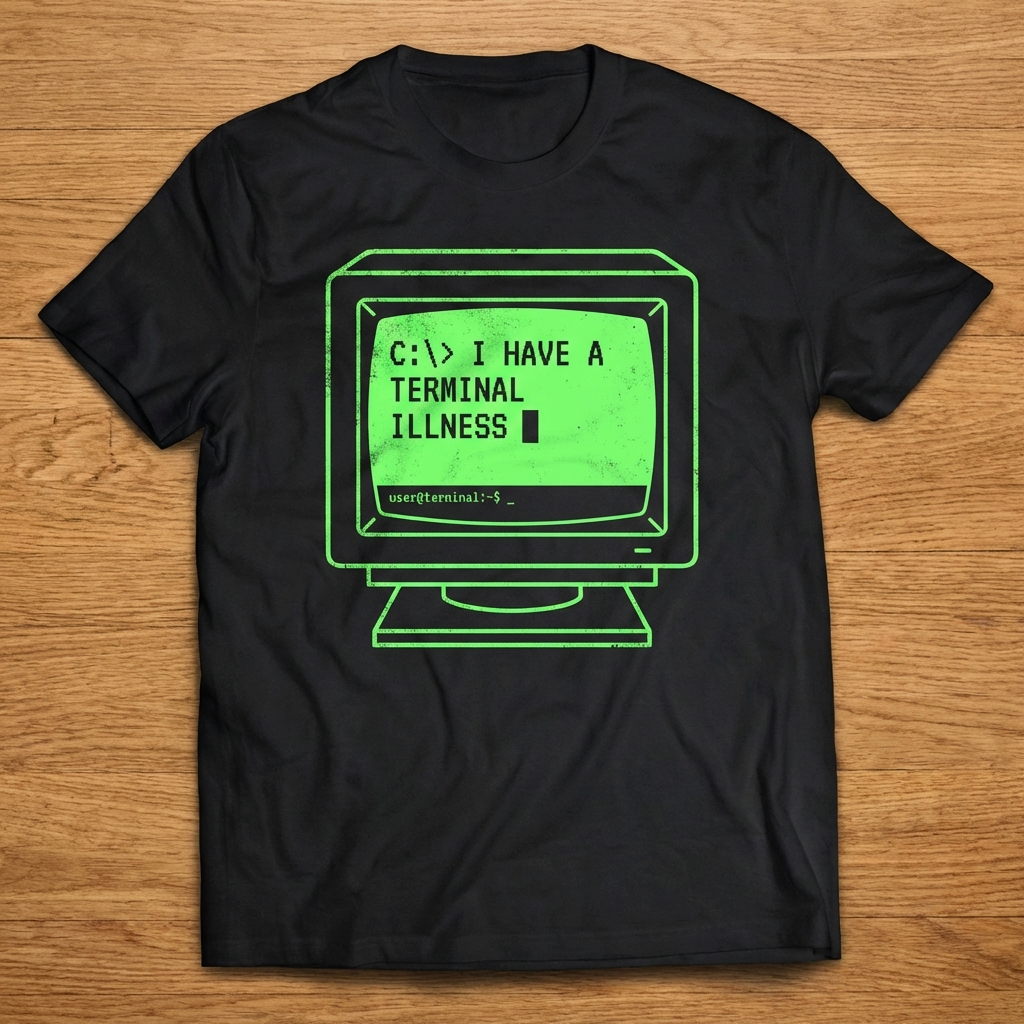
Programmers have a particular fondness for taking technical terms literally. "Terminal illness" isn't just a disease — it's what happens when you've been staring at a black screen with green text for so long that you've become one with the command line. "Merge no conflicts" isn't just a git status — it's a mythical unicorn that developers seek but rarely find.
Mythical creatures of software development:
1. Merge with no conflicts
2. Project finished on time
3. Requirements that don't change
4. Code with no bugs
5. The original developer who left comments
This type of humor works because it's simultaneously accurate and exaggerated. We laugh because the absurdity of our profession, when you really think about it, is absurd. Nobody in other industries spends their days arguing about whether to use tabs or spaces and means it with genuine conviction. But we do. And we should be able to laugh at ourselves for it.
The Cultural Artifact of Developer Merch
At some point, developer humor escaped the confines of office whiteboards and Slack channels and became material culture. T-shirts, stickers, mugs, and hoodies turned private jokes into public signals. When you wear terminal-illness on your chest, you're not just making a joke — you're claiming an identity.
This matters because identity affects motivation. Developers who feel connected to a community of peers — even a community built around shared suffering and dark humor — demonstrate more persistence, more creativity, and better collaboration. The shirt is a small thing, but it's a visible marker of belonging.
The best developer merch doesn't try to be cool or mainstream. It speaks directly to the experience. It validates what we feel. It says: "Yes, the terminal is your home now. Yes, merge conflicts are the worst. Yes, sometimes you just have to say 'fuck it' and ship it."
Laughter as Resistance
Here's a final thought: in a profession that constantly tells us we're not doing enough, that our code could be better, that we should be learning the latest framework, that technical debt is accumulating faster than we can pay it down — humor is a form of resistance.
When you laugh at the absurdity of a 3am production outage, you're refusing to let the situation have power over you. When you wear a shirt about shipping broken code, you're acknowledging that imperfection is human and that shipped is better than perfect. When you joke about merge conflicts with your teammates, you're building the kind of psychological safety that helps people take risks and grow.
The next time someone gives you grief for taking your work too seriously, remember: we laugh because we take it seriously. The stress is real. The stakes are real. And the only way to survive it with our sanity intact is to find the humor in it all.
So wear the stupid shirt. Tell the stupid joke. Push to production on Friday if you have to. We're all just trying to make the computers do what we want, and if we can't laugh at the gap between intention and outcome, what's the point?
After all, the terminal is always open. The merge conflicts never fully resolve. And at some point, we all develop a terminal illness from spending too much time in the terminal.
Ship it anyway.