The Rise of Vibe Coding — And the Merch It Inspired
How AI-assisted coding went from party trick to production-ready philosophy, and why the developer community turned its collective chaos into a fashion statement.
What the Hell Is "Vibe Coding"?
So there's this thing happening in software development right now. You've probably felt it, even if you haven't named it. You're building something, you get stuck, and instead of spending twenty minutes on Stack Overflow or digging through documentation, you just... describe what you want to an AI. Out loud. In plain English.
"I need a function that takes a user ID and returns their profile with all their posts, but only the ones from the last week, and I want it sorted by likes."
And then the AI writes that function. And it works. And you move on.
That's vibe coding. And once you start doing it, it's really hard to go back.
The term reportedly came from a tweet (because of course it did) where someone described their workflow: prompt, AI generates, copy-paste, iterate, ship. No local dev setup. No reading the entire documentation for the library you're using. Just vibes, baby.
But here's the thing that makes it genuinely interesting as a phenomenon: vibe coding isn't really about replacing developers. It's about changing what developers actually do. You're no longer the person writing every line. You're the person directing the orchestra. The AI is your always-available pair programmer that never gets tired, never judges your naming conventions, and will happily write your entire authentication system at 2am when you can't remember how JWTs work.
The term caught on because it describes something real: that feeling when you're building something and the AI just... gets it. You say "make a button that does the thing" and the AI makes a button that does the thing. It's magical. It's also terrifying.
The Philosophy of "Good Enough"
Here's where vibe coding gets interesting as a development philosophy. Traditional coding values precision, intentionality, and deep understanding of every line. Vibe coding throws a lot of that out the window in favor of momentum.
The philosophy basically boils down to this: if it works and you understand it well enough to maintain it, that's good enough. You don't need to be the one writing every character. You need to be the one steering the ship.
This is a huge mental shift. For decades, we've been taught that real developers write their own code. That anything you copy-paste without fully understanding is technical debt waiting to bite you. And look, there's truth to that. But there's also truth to the fact that shipping something imperfect today beats shipping something perfect... never.
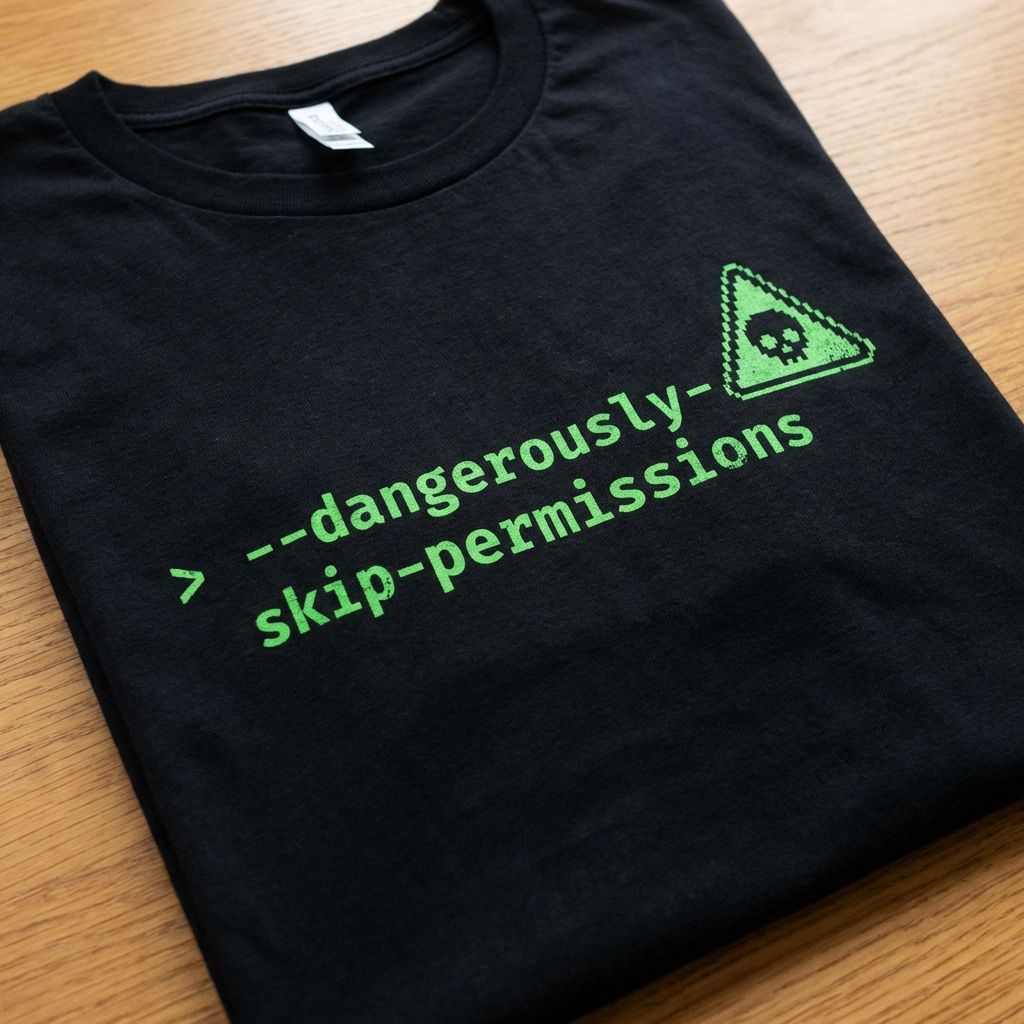
The dangerously-skip-permissions hoodie exists because we all know that feeling—the one where you comment out the auth check just to test something real quick and then the comment stays there through the entire sprint and somehow makes it to prod. It's not ideal, but it's honest. Vibe coding operates in that same spirit: rapid iteration with a wink and a nod to the consequences.
When It Works (And When It Doesn't)
Let me give you a real example. Last month, I needed to add a feature to a side project. Traditional me would've spent an hour setting up a local environment, reading through the existing code to understand the patterns, then carefully implementing the new feature. Vibe coding me spent five minutes in a chat with an AI, had a working implementation, and spent the next hour refining it.
For things like: - Scripts and automation - Boilerplate that you understand but don't want to write - Prototypes that might become real later - That one weird API integration that never has good documentation
Vibe coding is genuinely incredible. It removes the friction that kills momentum.
But then there are the times when it spectacularly fails. The AI will confidently write code that looks perfect but does something completely wrong. It will use outdated patterns. It will hallucinate entire APIs that don't exist. And because you didn't write it, debugging feels like deciphering someone else's handwriting in a language you only mostly speak.
// This looks right. It is not right.
const user = await getUserById(userId);
const data = await fetchDataForUser(user.profile.id);
// ... AI generates 50 more lines like this
// None of it works because the actual API is completely different
The AI gave me something like this. What it actually did was create three nested async calls that each returned undefined because the actual API structure was completely different. After an hour of confusion, I found the issue: the AI had invented an entire response structure that existed nowhere in reality.
The Culture It's Created
What's fascinating is how vibe coding has developed its own culture. There's a shared language now, inside jokes about prompt engineering as a real skill, memes about AI-generated code that's 90% there but subtly broken in ways that only reveal themselves in production.
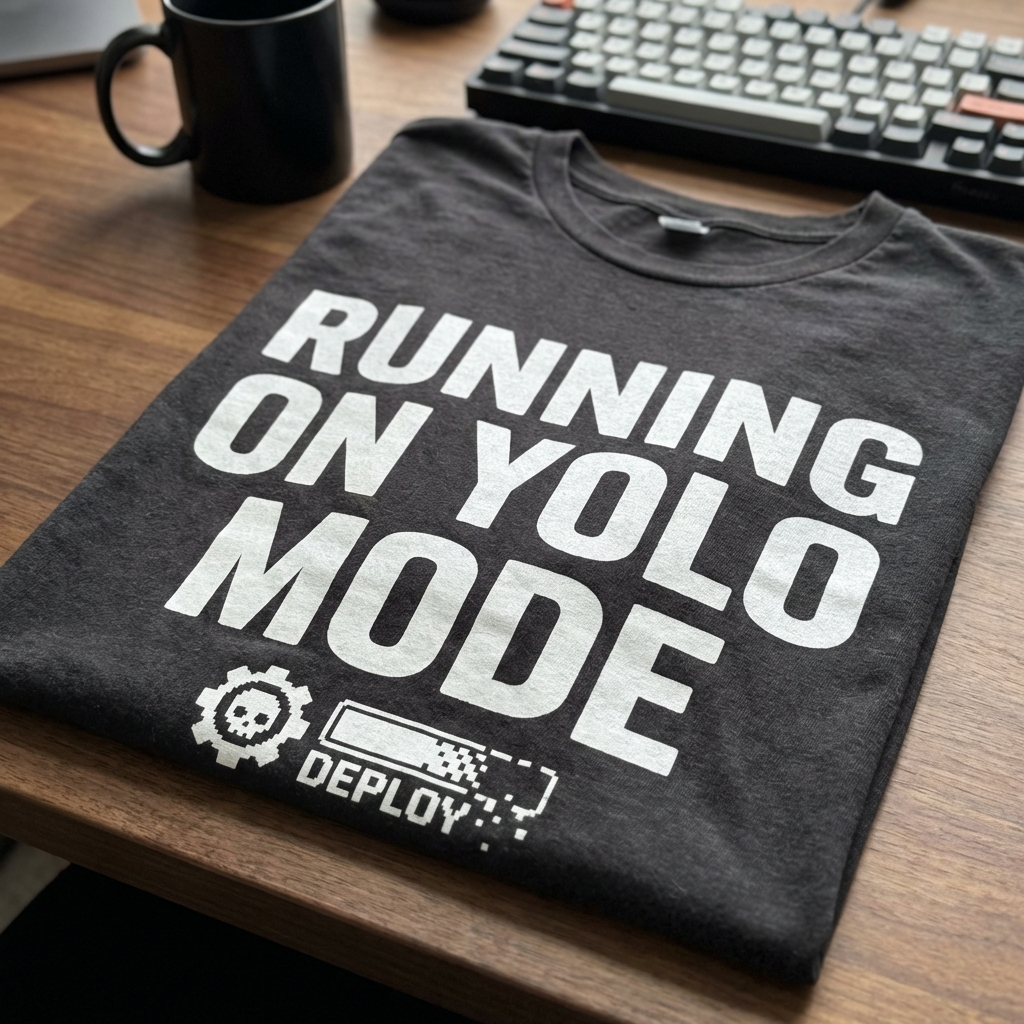
The yolo-mode shirt is perfect for this—because at some point in the last year, we all started committing things we would've been embarrassed about before. Not out of laziness, but out of trust in the process. You push the code, you see what happens, you iterate. It's terrifying and exhilarating in equal measure.
There's a genuine joy in the community around this. Developers are sharing their "vibe coding wins"—moments where the AI understood exactly what they wanted and generated something that just worked. And yeah, we're also sharing the spectacular failures, because the ability to laugh at yourself is part of the culture.
We made the yolo-mode shirt because this is a real thing developers are doing, and it's okay to admit that sometimes you just want to try something and see what happens. The analytical approach has its place, but so does the willingness to just... try. What if it works? What if it's actually fine?
The Merch That Says What We're All Thinking
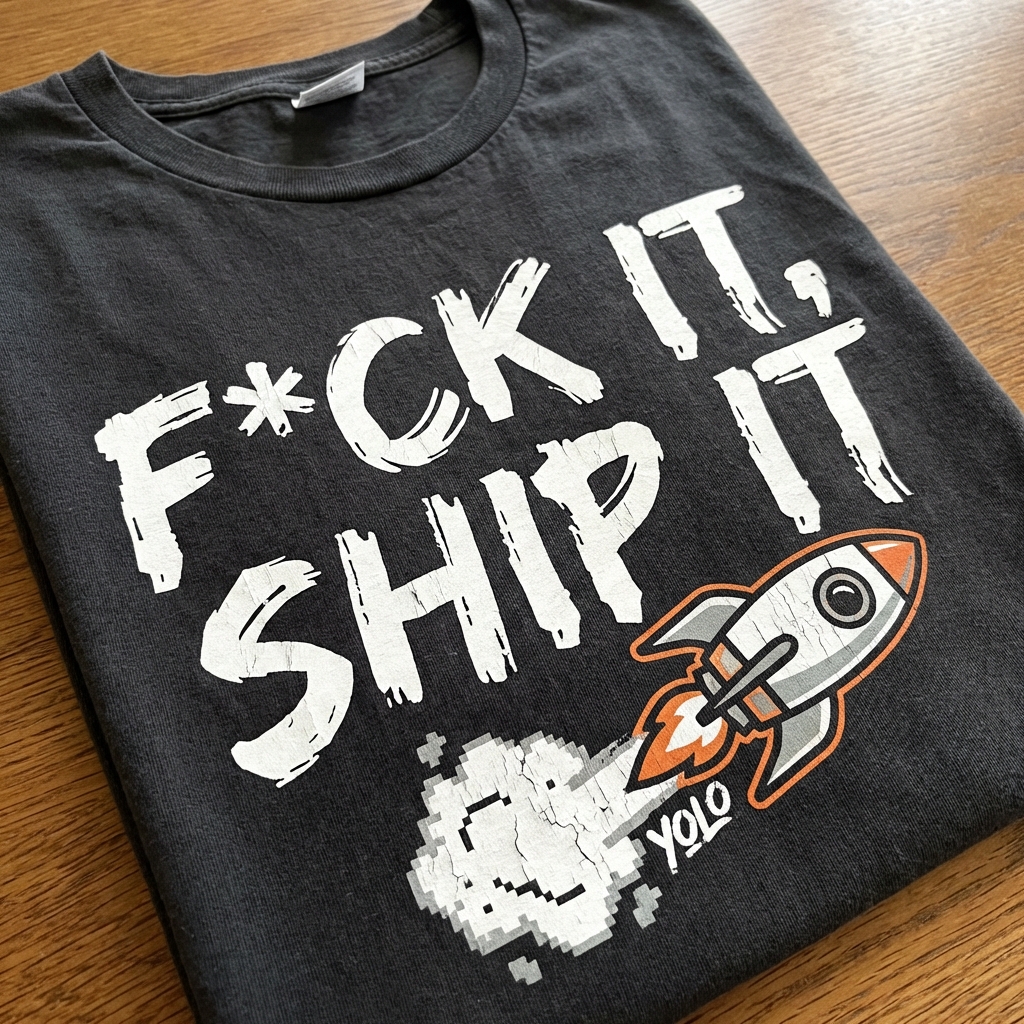
And that's really what the whole fuck-it-ship-it thing is about, isn't it? This is the energy behind a lot of modern software development. The tools have gotten so good, the iteration cycles so fast, that sometimes the best thing you can do is just ship it and let real users tell you what's broken.
We created these shirts because we saw something real happening in the developer community. Vibe coding isn't just a workflow—it's a whole philosophy about how to build things in an industry that's moving faster than any of us can individually keep up with. It's about trusting your tools, trusting your instincts, and having the confidence to iterate rather than perfect.
The best tech humor comes from authenticity. Anyone who's spent any time in a codebase with an AI coding assistant has felt the vibe coding moment. You've seen the magic. You've also seen the chaos. And you know that both are part of the process.
So yeah, throw on a dangerously-skip-permissions hoodie when you're about to do something you probably shouldn't. Wear yolo-mode when you're committing at 11pm after a long day and your judgment is questionable but your confidence is high. And definitely grab fuck-it-ship-it for that presentation you're about to give on a feature you built entirely with AI assistance and minimal actual understanding.
We're all figuring this out together. Might as well look good doing it.
The rise of vibe coding isn't the death of software engineering as we knew it. It's an evolution. The developers who'll thrive are the ones who learn to work with these tools, not against them—who understand that the goal isn't to write every line yourself, but to know what you want and how to ask for it.
And honestly? That's a pretty good philosophy for life in general. Know what you want, use the tools available, ship the thing, and iterate. The future is uncertain, the AI is definitely still hallucinating sometimes, and we're all just vibe coding our way through.
Let's see what we build next.