'My Safe Word Is Ctrl+C' — Designing for the Double Take
How NERDMERCH designs t-shirts that get funnier the longer you stare at them, and why the best developer humor works on multiple levels simultaneously.
Every great developer t-shirt operates on a simple principle: the first read makes you smile, the second read makes you laugh out loud, and the third read makes you want to buy it for every engineer you know. That's the double take, and it's the thing we chase when we design every single shirt for NERDMERCH.
The Anatomy of a Double Take
You know the feeling. You're walking across the office and you catch a glimpse of someone's shirt. First pass: "Ha, that's clever." Second pass, three seconds later: "Wait... that's hilarious." Third pass, while you're still thinking about it an hour later: "I need to know where they got that."
That's not an accident. That's architecture.
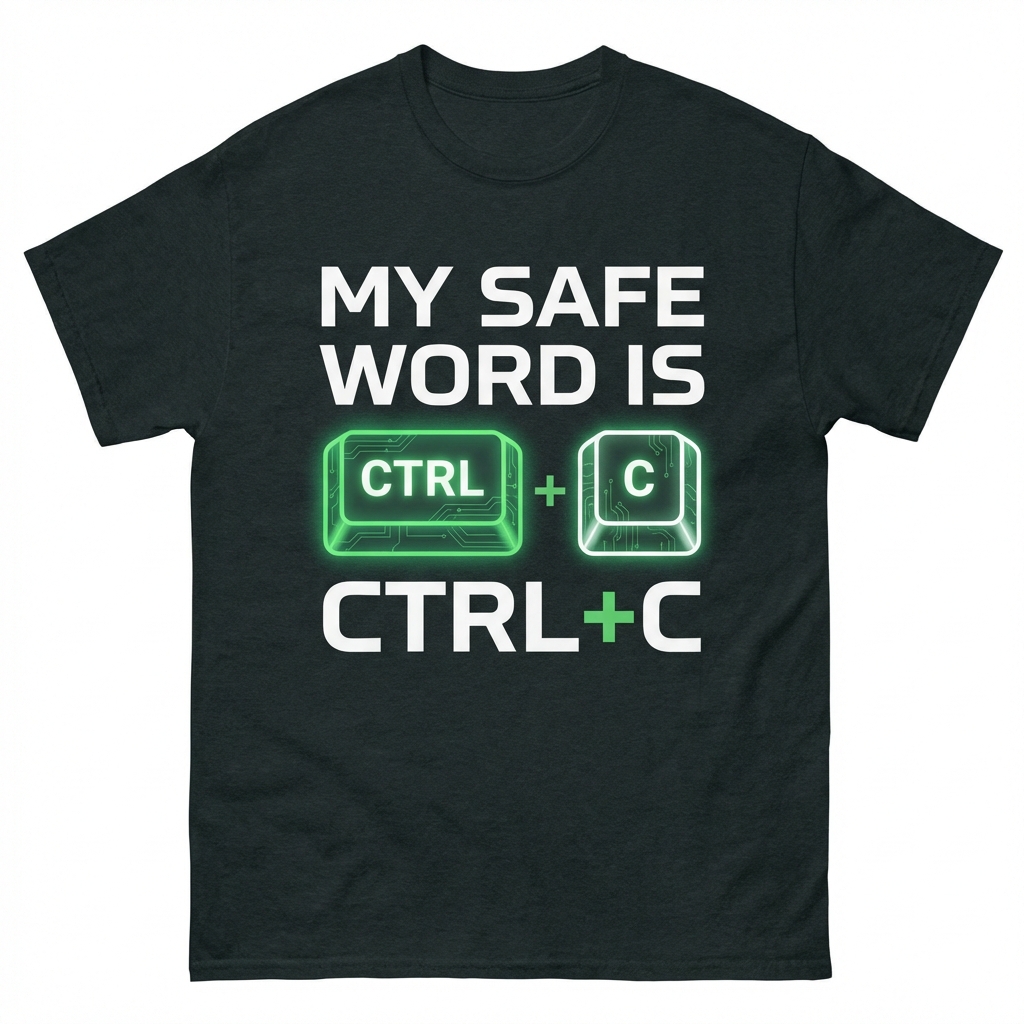
When we designed the safe-word-ctrl-c shirt, the entire concept was built around delayed gratification. The phrase "my safe word is Ctrl+C" works on three distinct cognitive levels simultaneously:
Level one: You know what a safe word is (vanilla stuff). You know what Ctrl+C does. They're both about stopping something, so it's a pun. Cute.
Level two: You realize that in a BDSM context, Ctrl+C is hilariously aggressive compared to saying something soft and sensual. The contrast is the joke.
Level three: If you're a developer, you realize Ctrl+C is how you actually escape from everything—infinite loops, bad SSH sessions, rogue scripts, that meeting that should have been an email. The real safe word isn't some word you agreed on with your partner. It's the muscle memory of Ctrl+C when your brain is screaming for mercy.
Three jokes. One shirt. The double take isn't optional—it's engineered.
Why Developers Are the Perfect Audience
Here's something that took us a while to understand: developers are both the easiest and the hardest audience to design for.
They're easy because they get layered humor instinctively. Years of reading code, debugging, and reading error messages have trained them to look at something and think "what is this actually doing?" They're natural analysts who can't help but parse layers of meaning.
They're hard because they have extremely high standards for what's actually funny. A surface-level pun? They'll give you a polite nod and keep walking. But something that genuinely reflects their daily experience, something that captures the absurdity of their job in a way they couldn't articulate themselves? That's the shirt they wear until it disintegrates.
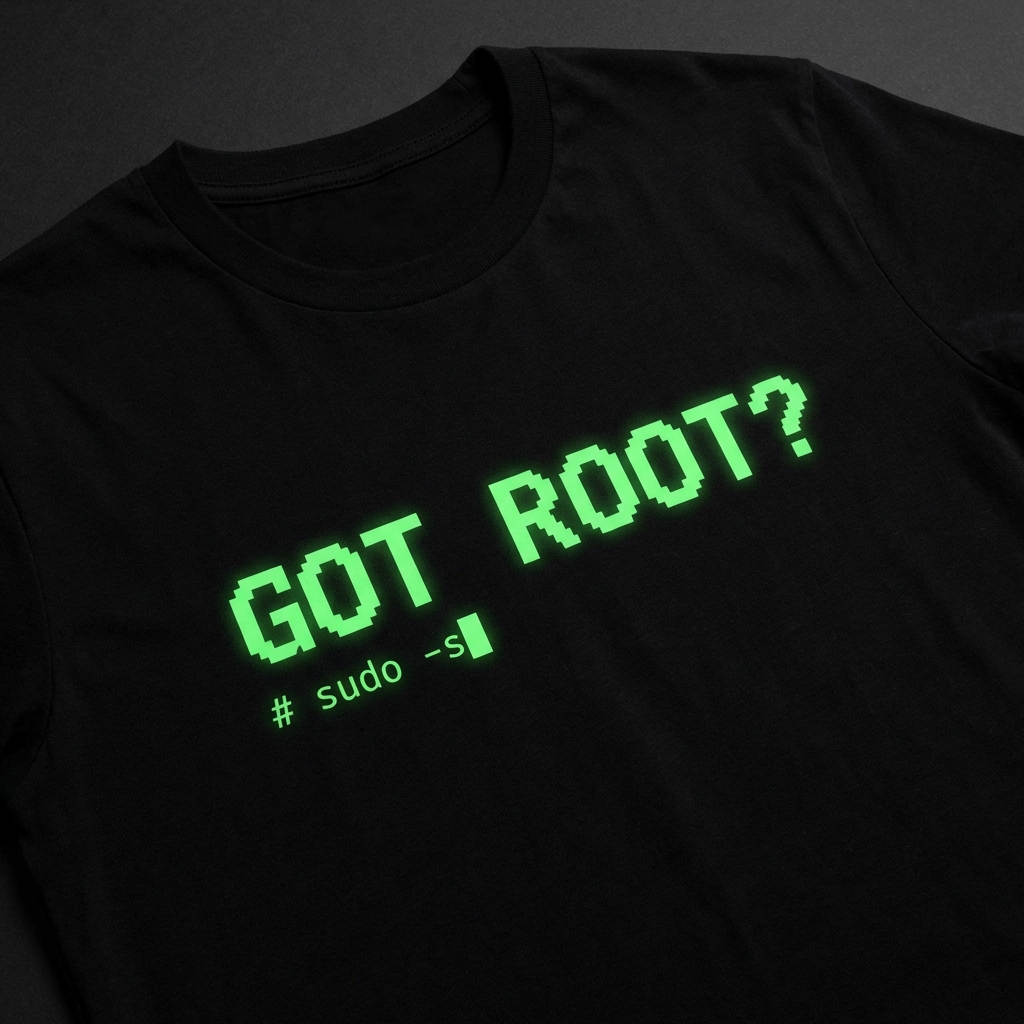
Consider the difference between a shirt that says "I'm a developer" (no) and one that says got-root (yes, obviously, every day of our lives). The first is a label. The second is an inside joke that only works if you've spent time in the trenches.
When we talk to developers about their relationship with humor, a theme emerges: they bond over shared suffering. The best jokes aren't about how smart developers are. They're about how ridiculous everything is. The tools, the processes, the users, the documentation, the infinite cascade of things that go wrong. Tech culture has its own mythology, and the shirts that survive are the ones that tap into that mythology authentically.
The Layered Joke Architecture
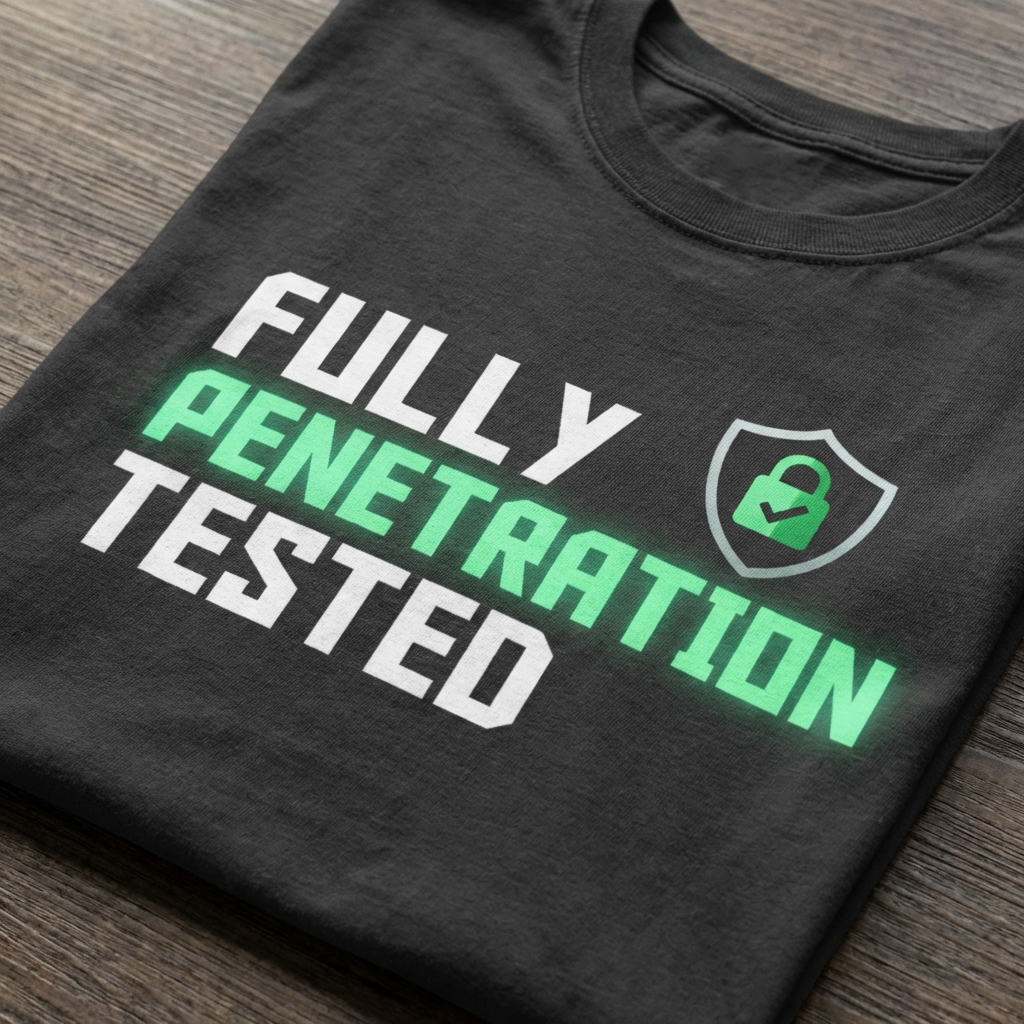
Let's talk about penetration-tested for a second, because it's a masterclass in layered comedy.
First read: Sounds provocative, vaguely scandalous.
Second read: Oh, it's about cybersecurity. The shirt is making a joke about security audits. That's cheeky.
Third read: If you've worked in security, you know that penetration testing is brutally mundane work. Sitting in a room for hours trying to find creative ways to break into systems while writing reports about it. The "provocative" name is the joke—it's the most boring thing imaginable wrapped in the most provocative language possible.
Fourth read (if you're a developer): Penetration testing is one of those things where you desperately hope someone is doing it to your systems, but you also never want to think about it. The shirt acknowledges that tension with a knowing wink.
This is the architecture we're building toward. The joke should reward attention. Every time the viewer looks closer, they should find something new. The best shirts create a micro-interaction: they pull the viewer into the joke rather than just presenting it.
Here's another pattern we see in the most successful designs: they use the visual language of the tech industry in unexpected contexts. When a developer sees something like:
if (life.happiness < threshold) {
  life.takeBreak();
}
printed on a shirt, their brain doesn't just read it—it parses it. It evaluates the logic. It has opinions about the threshold value. They might even mentally compile it and think "this would cause an infinite loop if happiness never increases." The shirt becomes a conversation starter because other developers can argue about the logic.
When Products Become Inside Jokes
There's a moment in every design sprint where we know we've gotten it right. It's not when we laugh at the concept—it's when the concept starts generating its own jokes.
The best shirt ideas have a gravitational pull. They attract related thoughts, spawn variations, make you think of specific people who would wear them. When we were workshopping the Ctrl+C concept, someone on the team immediately said "what about a matching shirt that says 'my safe word is sudo rm -rf /'" and suddenly we had enough ideas for a whole collection.
This is what we mean when we say developer humor is a culture, not a demographic. Developers don't just appreciate jokes—they build on them, riff on them, make them part of their identity. A great NERDMERCH shirt isn't just a punchline. It's a conversation starter, a signal to other developers in the wild, a small rebellion against the serious nature of everything we build.
The shirts that have connected most with our community are the ones that capture something developers feel but rarely articulate. The existential dread of git push --force. The paranoia of "did I actually commit that or did I just think about it really hard." The quiet satisfaction of finally understanding a regex. These aren't jokes that were handed to us—we lived them, workshopped them with real developers, refined them until they rang true.
The Craft Behind the Chaos
So how do you actually design a shirt that works on multiple levels? Here's the honest answer: it starts with listening.
We spend as much time in developer communities as we do in design tools. We read what engineers post about their jobs, their frustrations, their small victories. We notice which phrases get repeated, which observations generate the most engagement, which complaints mask something genuinely absurd about the industry.
The craft isn't in the execution—it's in the selection. Anyone can put a funny phrase on a shirt. The skill is in choosing which funny phrase reflects something real, something that will age well, something that won't be cringe in three years when the specific technology it references becomes obsolete.
That's why we lean into universal developer experiences rather than trendy frameworks or languages. Ctrl+C works today and will work in twenty years because developers will always need to escape from things. Root access is a fundamental concept that transcends any specific OS. The jokes that last are the ones that could only be made by people who genuinely understand what it's like to spend a career wrangling computers into submission.
The next time you see a developer t-shirt that makes you laugh twice—or three times—now you know why. Somewhere in a design process, someone sat down and asked: "what's the second layer? What's the third? What happens when someone really thinks about this?"
That's the craft. That's the double take. And that's what we try to earn with every shirt we make.
Wear your inside jokes loudly. The rest of us will know what you mean.