The Story Behind 'Got Root' — Layers of Meaning
How a three-character sysadmin command evolved into our most philosophically layered tee design, and what it really means to have root access.
The Command That Started It All
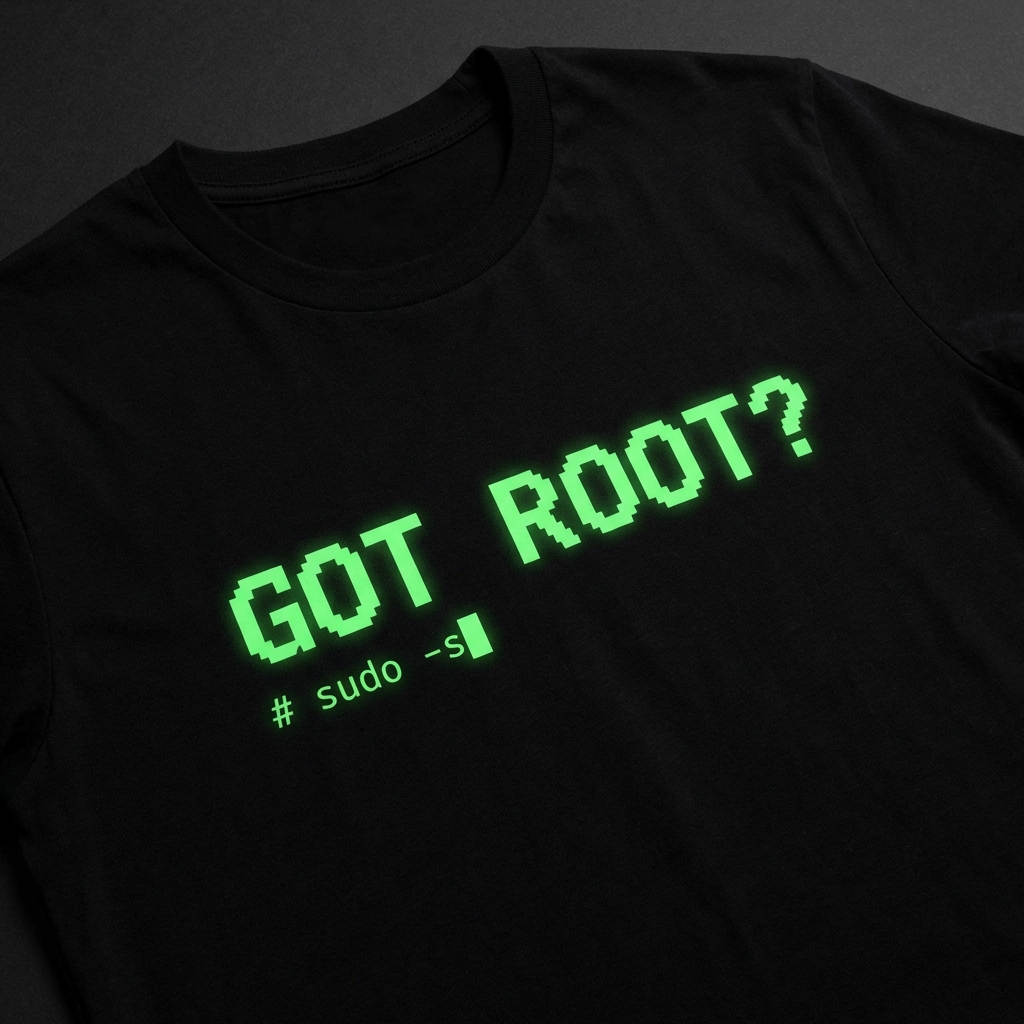
Every developer has that moment. You spin up a fresh Linux VM, log in as some limited user, and immediately type:
$ sudo su -
#
That hash symbol. That blinking cursor. You've crossed the threshold. You are root now.
The Got Root design started as a joke between two sysadmins who spent too much time wrestling with permission errors. One of them, half-asleep at 2 AM after a particularly nasty production incident, muttered "got root?" as a greeting. His coworker laughed so hard she nearly spilled her fifth cup of coffee. The idea was born overadium-filled nights and questionable amounts of外卖.
But here's the thing about good design: it grows on you. What started as a simple sysadmin joke revealed itself to have unexpected depth the more we thought about it.
It's Not Just About Servers
On the surface, Got Root is a sysadmin thing. You're on a box, you need access, you sudo your way to glory. We've all been there. That server won't restart itself, and someone has to be the hero at 3 AM when the automated scripts fail and the Slack alert won't stop screaming.
But root access means so much more in the tech world than just su -. You need root access to install packages that won't behave. You need root access when your colleague's "quick one-liner" accidentally changed ownership of the entire /home directory. You need root access when you're that colleague.
The t-shirt design plays on this because the phrase itself is completely context-dependent. Say it at a DevOps meetup and you'll get knowing nods. Say it at a general tech conference and you might get some confused looks. Say it at a security conference and you're starting an entirely different conversation about attack vectors and privilege escalation.
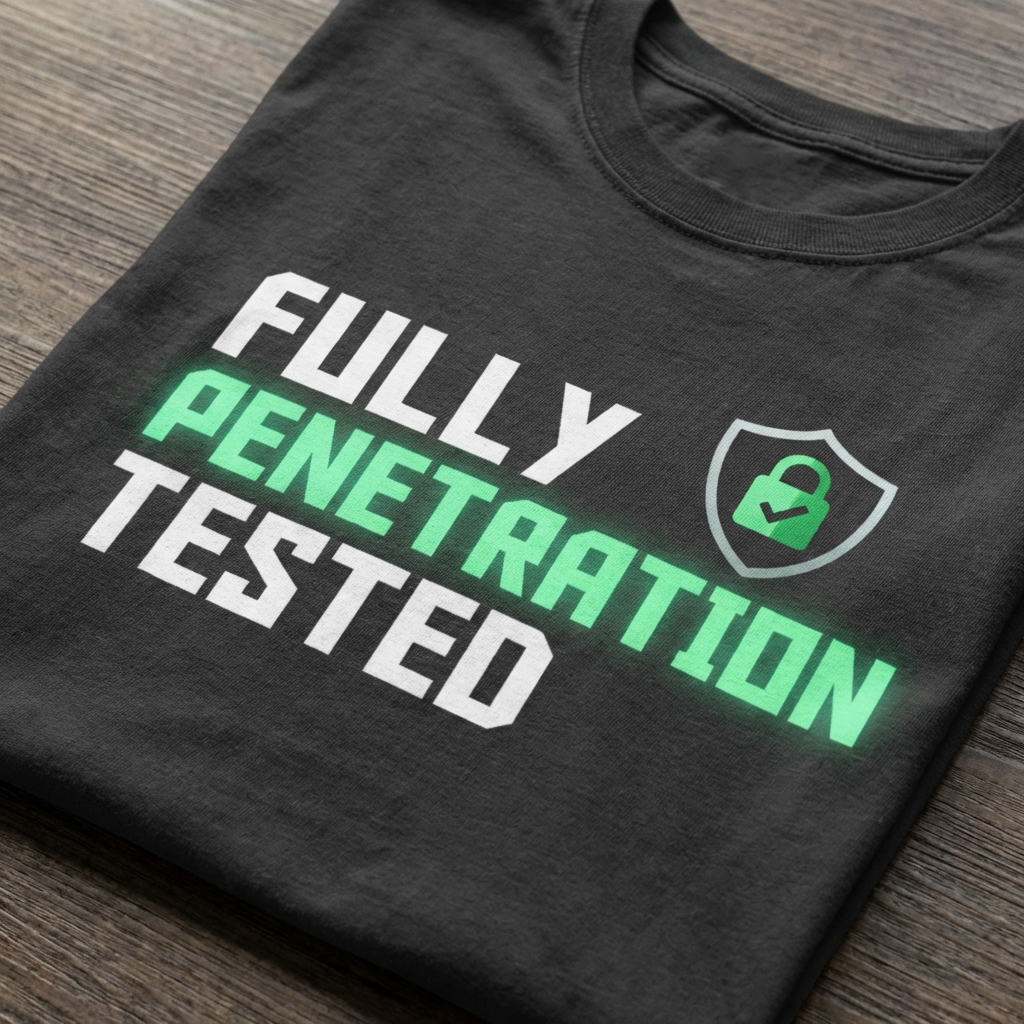
Our Penetration Tested tee exists in the same universe for a reason — both designs speak to the security mindset, the people who think about access controls and permissions as a lifestyle rather than a checkbox.
The Double Meaning Nobody Talks About
Here's where it gets interesting. In tech culture, "got root" has a second interpretation that the mainstream media occasionally stumbles upon: the cannabis reference. Yes, that root. The one you grow. The one that requires nutrients and careful pH balance and definitely not sudo.
This dual meaning wasn't intentional, but it wasn't accidental either. Tech culture has always been comfortable with overlap — we use "production" to mean both "where code runs" and "a place where things are made," after all. The idea that a single phrase could mean "I have administrative access to this server" and "I successfully cultivated a plant" is the kind of accidental poetry that makes language fun.
We leaned into this ambiguity in the design itself. The typography hints at terminal output, but there's something almost botanical about the serifs if you look at them sideways. It's a wink. You either get it or you don't, and either way, you've got a great conversation starter on your chest.
The Philosophy Nobody Asked For
But wait — there's a third layer, and this one really snuck up on us.
Root access is ultimate power. And ultimate power, as any systems administrator knows, is ultimate responsibility. The moment you su to root, every safety net disappears. That rm -rf you meant to run on a specific folder? Now it's running on everything. That misconfigured kernel parameter? You're not getting this system back without a reboot and prayers.
There's a reason sysadmins develop an almost religious reverence for backups. When you have root, you have the power to destroy everything you've built in a single command. The humility that comes from seeing a production database get wiped because someone ran commands as root at the wrong time — that changes you.
The Got Root design, intentionally or not, captures this tension. It's celebratory. It's cheeky. But it also carries a subtle warning: the person wearing this shirt has seen things. They've made mistakes. They've learned that with great power comes great responsibility, and occasionally, great data loss.
Where It Lives Now
We originally designed this tee for the sysadmin crowd, the people who keep the lights on while everyone else gets to build things. But it's found a home with a much broader audience. Penetration testers love it because privilege escalation is literally their job. Backend developers love it because they've all spent time in production environments they shouldn't have been in. Even folks who've never touched a terminal appreciate the confidence the design projects.
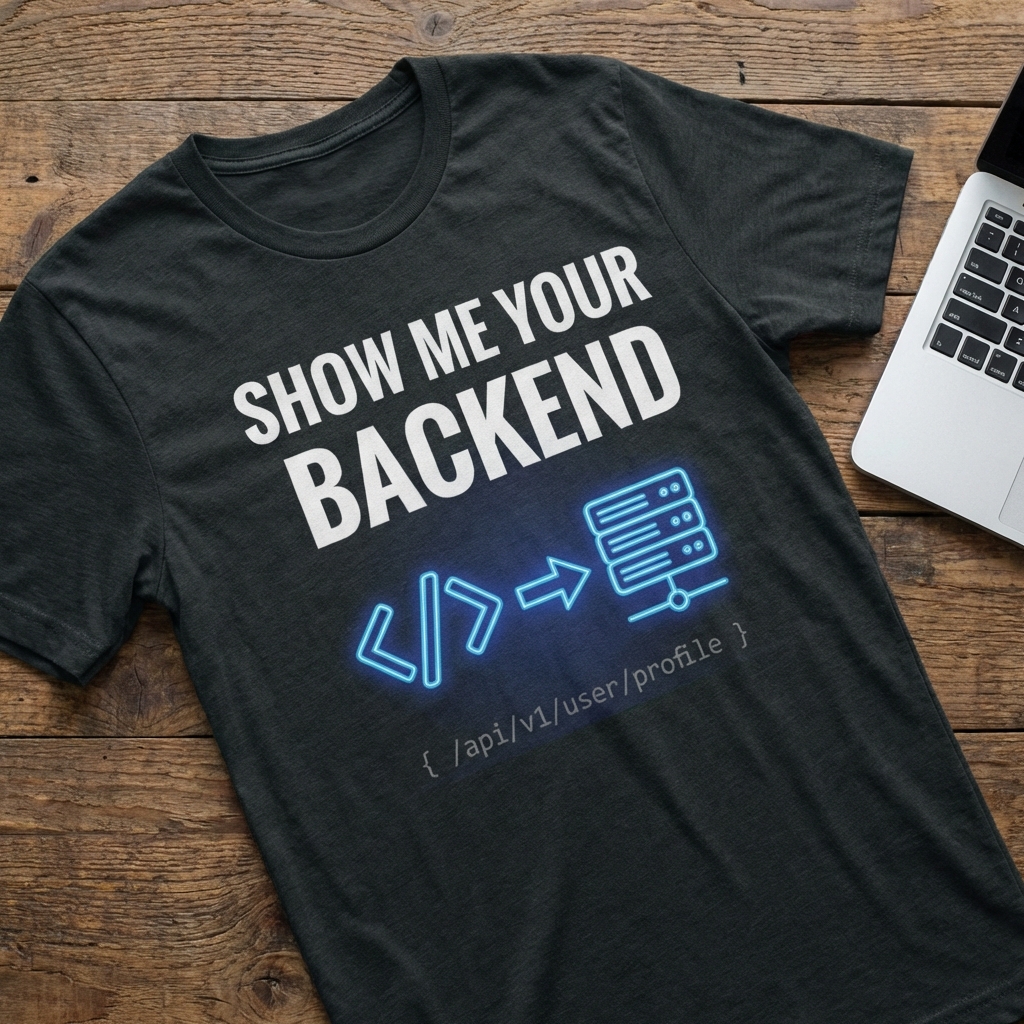
The Show Me Backend crowd and the Got Root crowd overlap more than you'd think. Both groups understand that invisible infrastructure is what makes everything else possible. Both groups have stories about the time something went wrong at 2 AM. Both groups know the weight of a hash symbol at the beginning of a command line.
That's what makes a great tee, we think. Not just a joke, but a shared experience you can wear. A little piece of cultural shorthand that says "I understand" without having to explain anything.
The Design That Keeps on Giving
Three years in, Got Root remains one of our bestsellers, and we genuinely believe it's because the design keeps revealing new layers. First you see the terminal reference. Then you notice the double meaning. Then you think about what it actually means to have unrestricted access to a system. Each time you put the shirt on, you might notice something different.
We've had customers tell us they bought one for their entire ops team. We've had security researchers say it perfectly captures the feeling of landing a new zero-day. We've had people who have no idea what sudo means ask about it, and when we explain, they laugh and buy three more for gifts.
That's the magic of good tech humor. It meets people where they are. You don't need to have accidentally deleted production on a Friday afternoon to appreciate the design — but if you have, you know exactly why it matters.
So the next time you're SSH'd into a box and you type that magical sequence of commands that grants you god-mode access to a running system, take a moment to appreciate the weight of it. You're not just getting root. You're joining a lineage of sysadmins, developers, and hackers who understand that sometimes, the most powerful thing you can do is control who gets to run the commands.
And if you're lucky enough to have one of our tees, you're wearing that understanding right on your chest. Now that's what we call layered meaning.