Why Terminal Aesthetics Dominate Developer Style
From blinking cursors to bash scripts, the terminal isn't just where we work—it's become our aesthetic. Here's why developer style has been colonized by the command line.
There's a specific kind of person who sees a t-shirt with a blinking cursor and thinks "that's me." They don't just tolerate the aesthetic—they are the aesthetic. We're going to unpack why the terminal has become the dominant visual language of developer style, and why that makes perfect sense.
The Terminal as a Second Skin
Walk into any tech conference, open source event, or developer happy hour. The dominant visual language is unmistakable: dark backgrounds, green and amber text, monospace everything. It's not just fashion—it's identity projection.
The terminal represents mastery. When you're in a CLI, you're operating at a level that most computer users never reach. The graphical interface is for consumption; the terminal is for creation. So when developers wear terminal aesthetics, they're signaling competence. They belong to a tribe that speaks this particular dialect of the machine.
Consider how often you see root@server:~# or user@localhost:~$ in designs. These aren't just strings of text—they're badges of belonging. The person wearing that shirt knows what sudo means. They've SSH'd into a box at 3 AM to debug a production issue. They've survived rm -rf moments they won't soon forget.
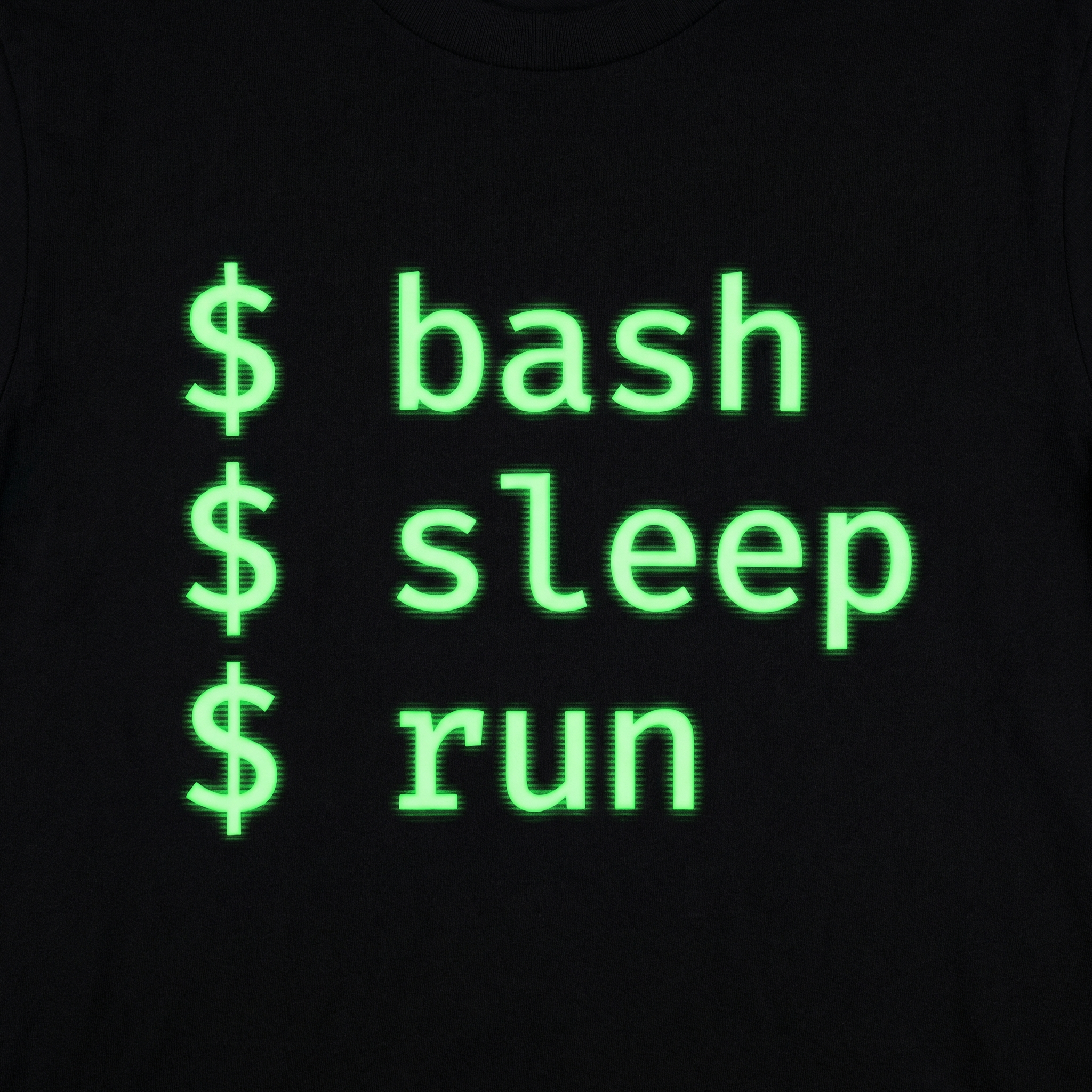
The [bash-sleep-run](/products/bash-sleep-run) shirt captures this perfectly. It's not just clever—it's a specific joke about a specific workflow. The kind of joke that only lands if you've lived it.
Monospace as a Statement
You can spot a developer's wardrobe from across the room. Not because of logos or brand names, but because of the typography. Monospace fonts aren't the default choice for fashion—they're a deliberate rejection of defaults.
When Courier New appears on a t-shirt, it's ironic. When Fira Code or JetBrains Mono shows up in a design, it's earnest. Developers have adopted monospace as their serif—a marker of craft and intentionality. We could choose any font, but we choose this one. The equal character widths. The terminal aesthetic. The reminder that we're builders, not consumers.
There's also something satisfying about the visual rhythm of monospace text. Everything lines up. Everything has its place. In a job that's mostly about wrangling chaos into order, that alignment feels meaningful.
The Color Palette of the Dark Mode Generation
Walk through any developer tool's settings and you'll find the same options: GitHub's "dark dimmed," VS Code's "Abyss," iTerm's "Solarized Dark." The dominant color story of developer culture is a night-shift palette—dark backgrounds with high-contrast text in greens, ambers, cyans, and magentas.
This isn't arbitrary. Developers spend 8-12 hours a day staring at screens. Light mode is for presentations and parent-teacher conferences. Dark mode is for getting work done. The aesthetic of terminal culture emerged from genuine ergonomic necessity and became a visual identity.
When that palette shows up on t-shirts, it's a declaration: I live in this world. The colors aren't decoration—they're the results of thousands of hours of screen time. The phosphor green of old CRTs lives rent-free in developer visual culture.
# The unofficial developer color palette
BG: #0d1117  # dark background
FG: #c9d1d9  # readable text
ACCENT: #58a6ff  # links and highlights
SUCCESS: #3fb950  # green like a terminal prompt
The `rm -rf` Joke Lands Because It's Real
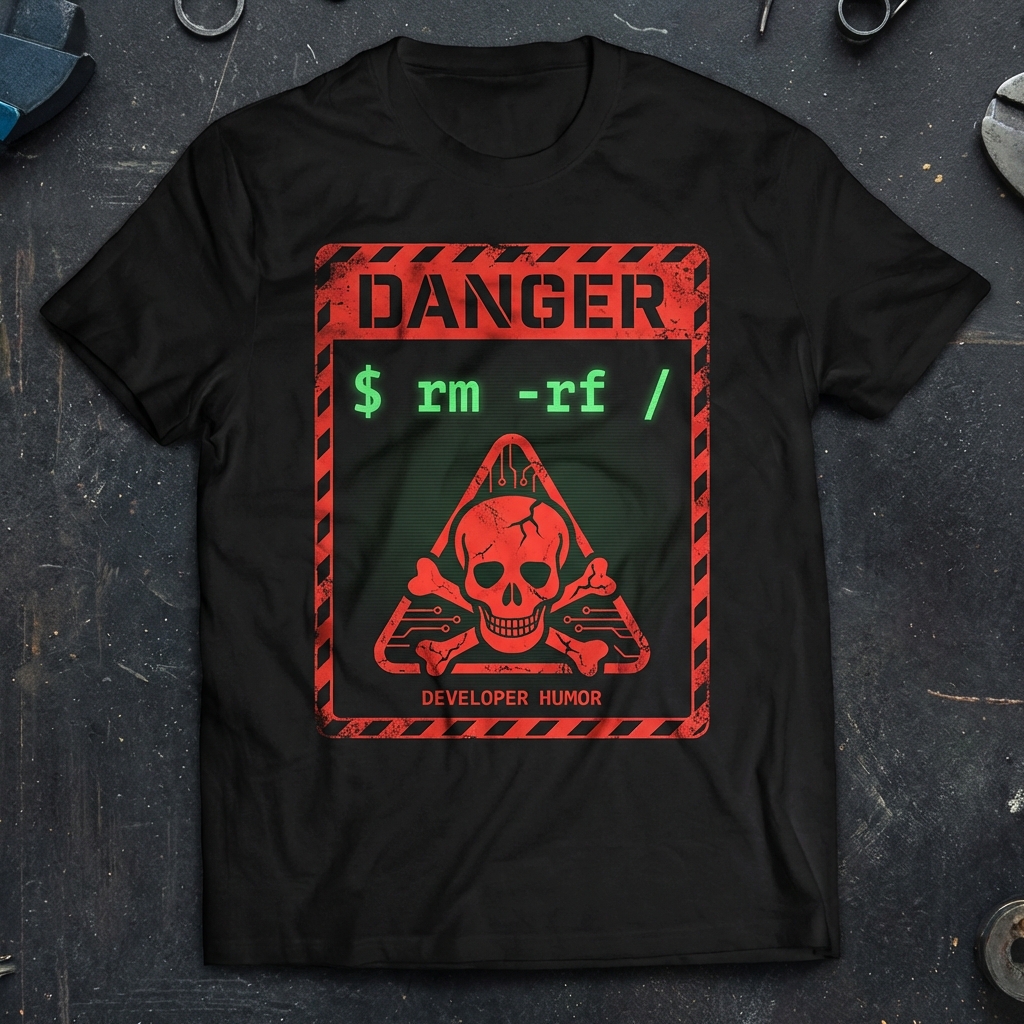
Every developer has a rm -rf story. The moment where a simple command became a moment of existential dread. The floor clearing. The backup restoration. The lesson that no tutorial teaches until it teaches you.
This is why humor around dangerous commands resonates. It's not dark humor for shock value—it's shared trauma transformed into identity. The [rm-rf-danger](/products/rm-rf-danger) shirt doesn't celebrate destruction; it celebrates survival. It says "I've been there, and I learned."
Developer culture has always processed collective experiences through humor. The jokes that stick are the ones rooted in real moments. Every developer recognizes the feeling of typing rm -rf with a trailing space and feeling their soul leave their body. That shared recognition creates community.
The best developer fashion doesn't just look cool—it tells the truth about the life. It's insider humor that welcomes insiders.
The 404 of It All
HTTP status codes have become a vernacular. 404 (not found), 500 (server error), 418 (I'm a teapot). These aren't just technical specifications—they're inside jokes that have leaked into broader culture.
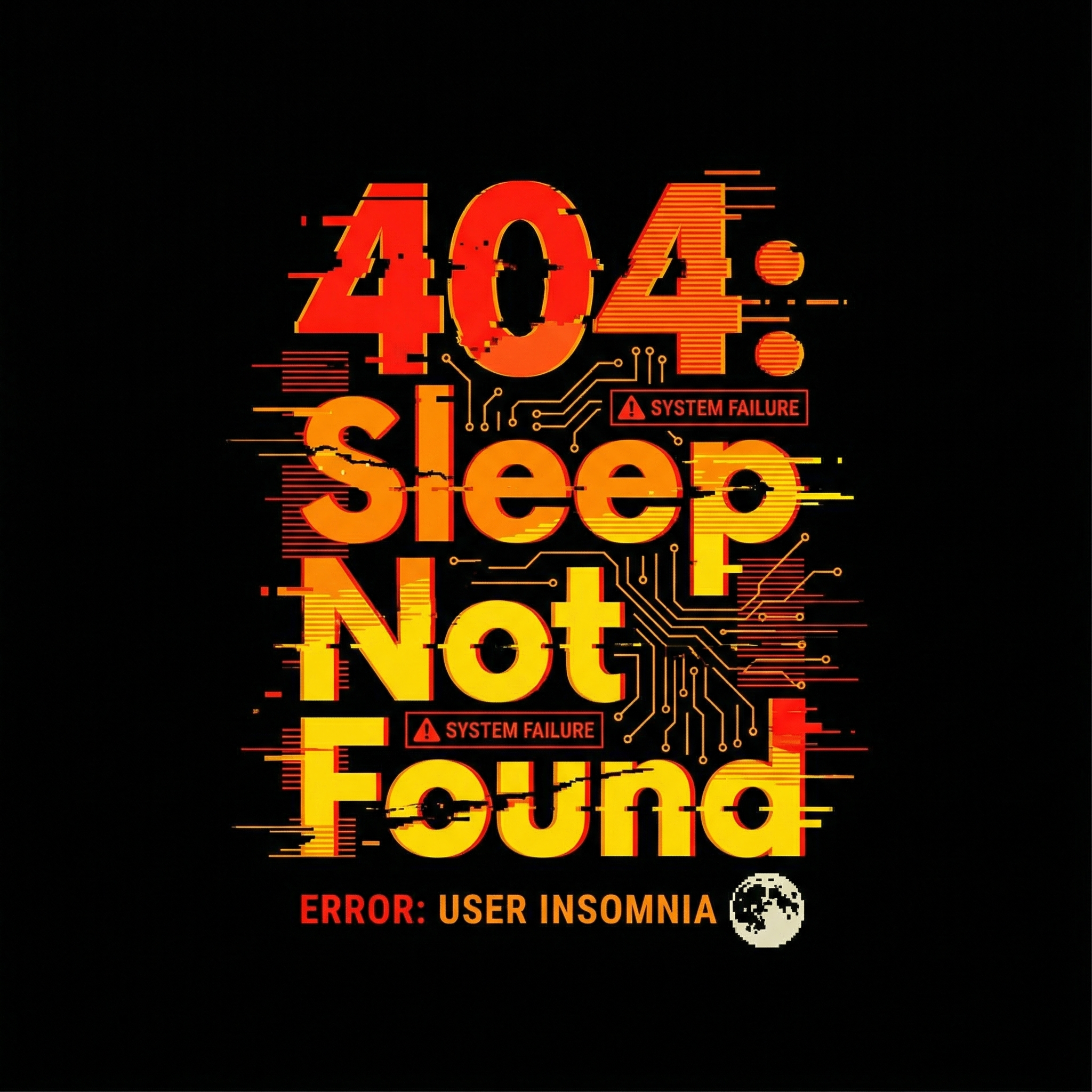
The [404-sleep](/products/404-sleep) design works on multiple levels. It's a pun on the familiar 404 error. It's a commentary on developer sleep schedules. It's a specific complaint that every engineer recognizes. "Cannot find resource: rest." "Error: dreams not implemented." The humor comes from specificity.
This is what separates developer fashion from other niche aesthetics. The jokes require knowledge to decode. A 404 error message is just text to most people. To a developer, it's a specific kind of failure with specific implications, and the joke lands because we know exactly which process is running when we should be sleeping.
Why This Aesthetic Keeps Growing
The terminal aesthetic in developer fashion isn't a trend—it's a durable identity marker that's only getting stronger. As more people learn to code, the community grows and the visual language becomes more recognized.
But there's something else happening. Non-developers are increasingly adopting terminal aesthetics too. Dark mode has gone mainstream. Monospace fonts appear in luxury brand designs. The visual language of the command line has crossed over because it signals something: intelligence, counterculture, a certain kind of problem-solving orientation.
For developers, this is validation and gentle displacement at the same time. The aesthetic we built for ourselves is being discovered. That's probably fine—there's enough terminal to go around. And honestly? It's nice to see more people understanding why blinking cursors are cool.
The next time you see someone wearing a shirt with a bash prompt or a playful 404 error, you know you're looking at someone who speaks the language. The terminal aesthetic dominates developer style not because it's imposed, but because it genuinely represents who we are: command-line natives who found our visual identity in the very interfaces we spend our lives working in.
We live in the terminal. We might as well wear it.