The Funniest Error Messages That Became Internet Legend
From 'PC LOAD LETTER' to 'segfault' — these error messages didn't just break our code, they broke our souls and became cultural touchstones for developers everywhere.
Let's be real: every developer has a graveyard of error messages they've stared at at 3 AM, coffee cold, sanity fraying. But some errors? Some errors achieve a kind of immortality. They transcend the terminal and become inside jokes, memes, and even fashion statements. Today we're celebrating the error messages that became internet legend.
The OG: PC LOAD LETTER
If you've ever worked with a legacy HP LaserJet printer, you've encountered the infamous PC LOAD LETTER error. It sounds like existential advice. It's not. It means the paper tray is empty or the printer is having a identity crisis — which, honestly, we relate to.
This error achieved meme status because it's simultaneously incomprehensible and oddly profound. "PC LOAD LETTER" sounds like a philosophical question. What should PC load? Letters? Love letters? Our dignity? The printer doesn't specify. It just demands.
The beauty of PC LOAD LETTER is its vagueness. It tells you nothing about what's actually wrong while making you feel like you should already know. And that right there is the blueprint for half of modern error messages.
Segmentation Fault: The Dramatic Exit
Segmentation fault (core dumped) is the Shakespearean tragedy of error messages. It doesn't just say "something went wrong" — it announces the death of your program with theatrical flair. The core dump is the body. You've witnessed a murder.
Segmentation fault (core dumped)What makes this error legendary is its complete uselessness to the uninitiated. A segfault tells you your program tried to access memory it shouldn't have, but communicates it with all the warmth of a medieval scroll. "Thou hast erred. The segment, it is faulted. Core dumped. Goodbye."
We've all been there: you run your code, the terminal flashes red, and there it is. The segmentation fault. Your program is dead. All that remains is a core file full of your failures. At least it had the decency to leave something behind.
The rm -rf: Recklessness Rewarded
Speaking of dramatic exits, no conversation about legendary errors is complete without mentioning rm -rf. Not technically an error message — more like a force of nature that creates errors in its wake.
If you haven't heard the horror stories, here's a quick example:
rm -rf /var/cache/*
# Cool, just cleared the cache like a responsible admin
Except someone accidentally typed a space in the wrong place, and suddenly you've deleted half your system. The error message that follows is usually just the hollow sound of your career choices echoing back at you.
The rm -rf command represents that beautiful, terrifying power we have as developers — root access, absolute freedom, and zero second chances. It's earned its place on our "Danger: High Voltage" collection, because some commands should come with warning labels.
Null Pointer Exception: The Existential Crisis
NullPointerException at line 47. You've seen it. You've cursed it. You've spent three hours finding out you never actually initialized that one variable you were so sure you didn't need.
Exception in thread "main" java.lang.NullPointerException
    at com.example.App.main(App.java:47)
The null pointer is philosophical. It represents nothingness itself. Your object doesn't exist, but somehow your code is still trying to call methods on it. It's the digital equivalent of shouting into a void and being surprised when the void shouts back.
Every developer has a "null story." Maybe it was checking if a user was logged in when currentUser was null. Maybe it was accessing .length on an array that never got populated. The result is always the same: crash, stack trace, and a trip down memory lane to find where your assumptions went wrong.
404: The Digital Ghost
404 Not Found is perhaps the most famous error code in human history. Everyone knows it. Even your non-technical relatives have heard of 404. It's the "I'm not here" of the internet, and somehow it's become a cultural shorthand for failure, absence, and broken things.
The 404 error is special because it implies something that should exist... doesn't. You followed a link, you typed a URL, you were promised content. And now you're standing in a digital empty room, complete with "there's nothing here."
We've all experienced the 404. You click a link from 2012, expecting wisdom, and get... nothing. The page is gone. Like tears in rain.
But here's the thing about 404s: they inspired some of the most creative error pages on the internet. Dead links led to joke pages, hidden games, and yes — plenty of "lol u here" memes. The 404 became a canvas for developer humor, spawning an entire genre of witty "page not found" messages.
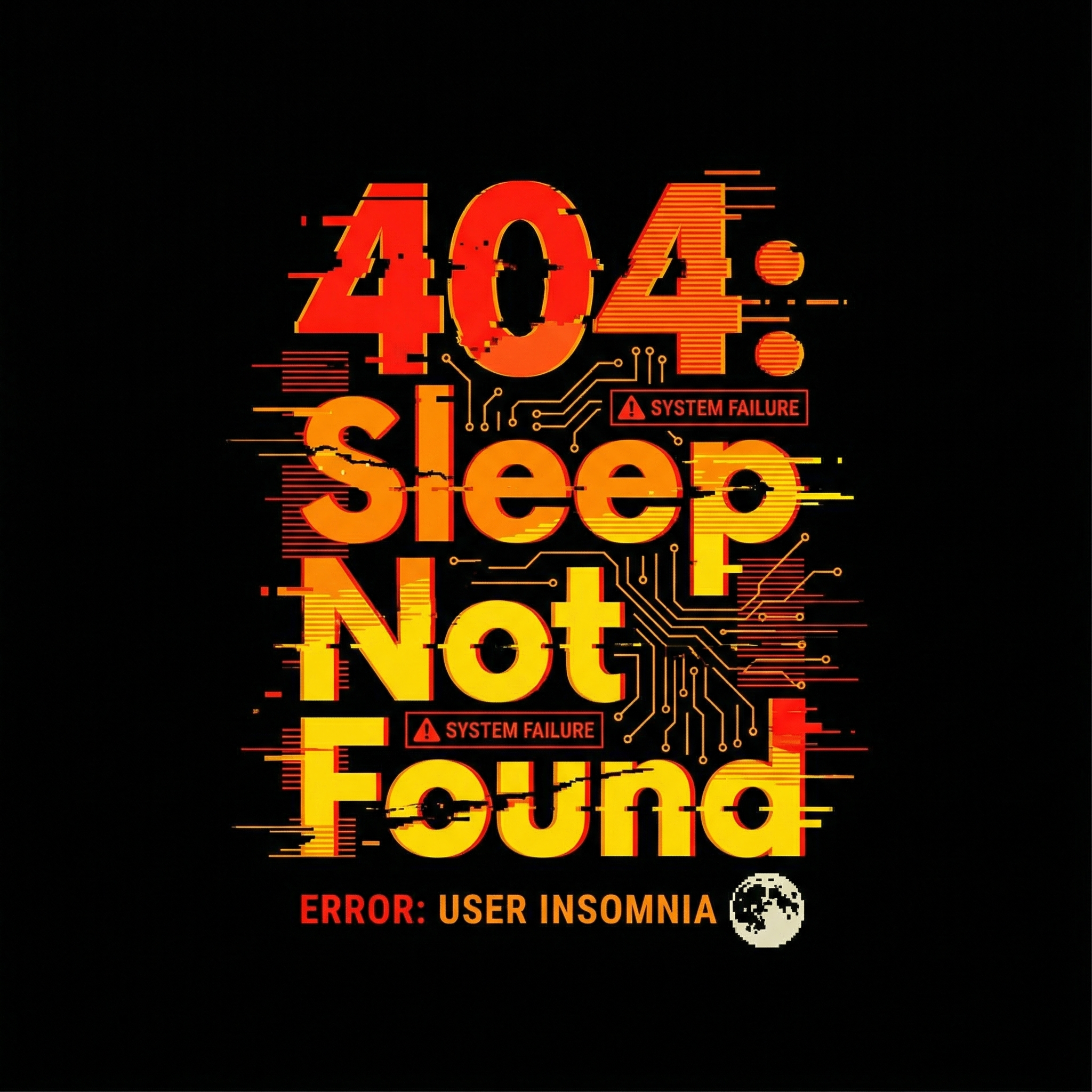
Our 404 Sleep shirt captures this perfectly — because after a long night of debugging and finding nothing but 404s, what you really need is a nap.
The Stack Overflow Experience
You've coded yourself into a corner. The error message is in a language you don't speak. Your debugging attempts have created three new bugs. Your colleagues are gone. The office is dark except for your monitor's glow.
This is the stack overflow experience, and it's less a specific error and more of a state of being. You had too much recursion. You trusted your base case too much. And now? Now you've overflowed.
StackOverflowError: null
    at java.lang.Thread.StackOverflowError(Native Method)
The stack overflow represents that moment when logic fails itself. When the very mechanisms you built to solve problems become the problem. It's recursion eating itself. It's infinite loops made manifest. It's the dragon eating its own tail, and we're all just hoping the dragon has a good error handler.
Why These Errors Endure
Here's the real question: why do certain error messages achieve immortality while others fade into obscurity?
It comes down to three things:
1. Vagueness with attitude. The best error messages tell you something went wrong without telling you why. They taunt you. PC LOAD LETTER is the masterclass in this.
2. Relatability. Every developer has hit a segfault. Every developer has wrestled with null. These errors aren't just technical — they're emotional experiences we share.
3. The element of surprise. Errors that seem to announce themselves with personality — "segmentation fault (core dumped)" — stick with us because they break the expected pattern. A dry "ERR_NULL_RESPONSE" doesn't leave an impression. "Core dumped" feels like an event.
Error Messages as Culture
The errors we've discussed have transcended their technical origins. You can buy a shirt with PC LOAD LETTER on it. 404 memes get shared millions of times. "Stack overflow" is both a website and a phenomenon.
This is developer culture at its finest: we take the frustrating, the broken, the absurd, and we make it ours. We laugh at the errors because crying would take too long and there's still code to debug.
So the next time you see a NullPointerException or get ghosted by a 404, remember: you're part of a tradition. You're not just debugging code — you're participating in the grand legacy of developer humor that stretches back decades.
And if that doesn't help, at least you can buy a funny t-shirt about it. We've got some suggestions:
- The No Dependencies collection for when you just want to keep it simple
- rm -rf danger gear for the chaos agents among us
- And of course, 404 Sleep for when error messages finally win
Now go fix those bugs. The errors are waiting.
Happy debugging, nerds.