From GPT to Fashion — How LLMs Changed Internet Culture
AI went from powering our autocomplete to defining our entire internet vibe, and somehow that impact landed on t-shirts too. Here's how LLM culture crashed into the merch world.
Let's be honest: if you'd told developers in 2020 that within three years we'd have AI-generated memes, AI clothing brands, and a whole subculture of tech humor centered around large language models, most would've laughed you out of the hackathon.
But here we are. And honestly? The merch is better than anyone expected.
The Moment Everything Changed
When ChatGPT dropped in late 2022, nobody was thinking about fashion. We were too busy watching our Slack channels explode with "bro, did you see what it wrote?" and "it's going to take my job" and "I asked it to debug my spaghetti code and it actually did."
The cultural shift happened fast. Within months, the internet had a new lingua franca. Terms like "prompt engineering" entered the vocabulary of people who'd never written a line of code. Your parents learned what tokens were — and started asking if you'd considered a career in AI.
The funny thing is, developers weren't just using these tools. We were documenting them in real-time. Every weird edge case, every hallucination, every moment where the model went completely off the rails — we shared it. The community's collective output of LLM weirdness became its own folklore.
User: Write a poem about debugging
Model: *produces haiku about null pointers*
User: That's not a haiku
Model: *apologizes and produces limerick about segfaults*
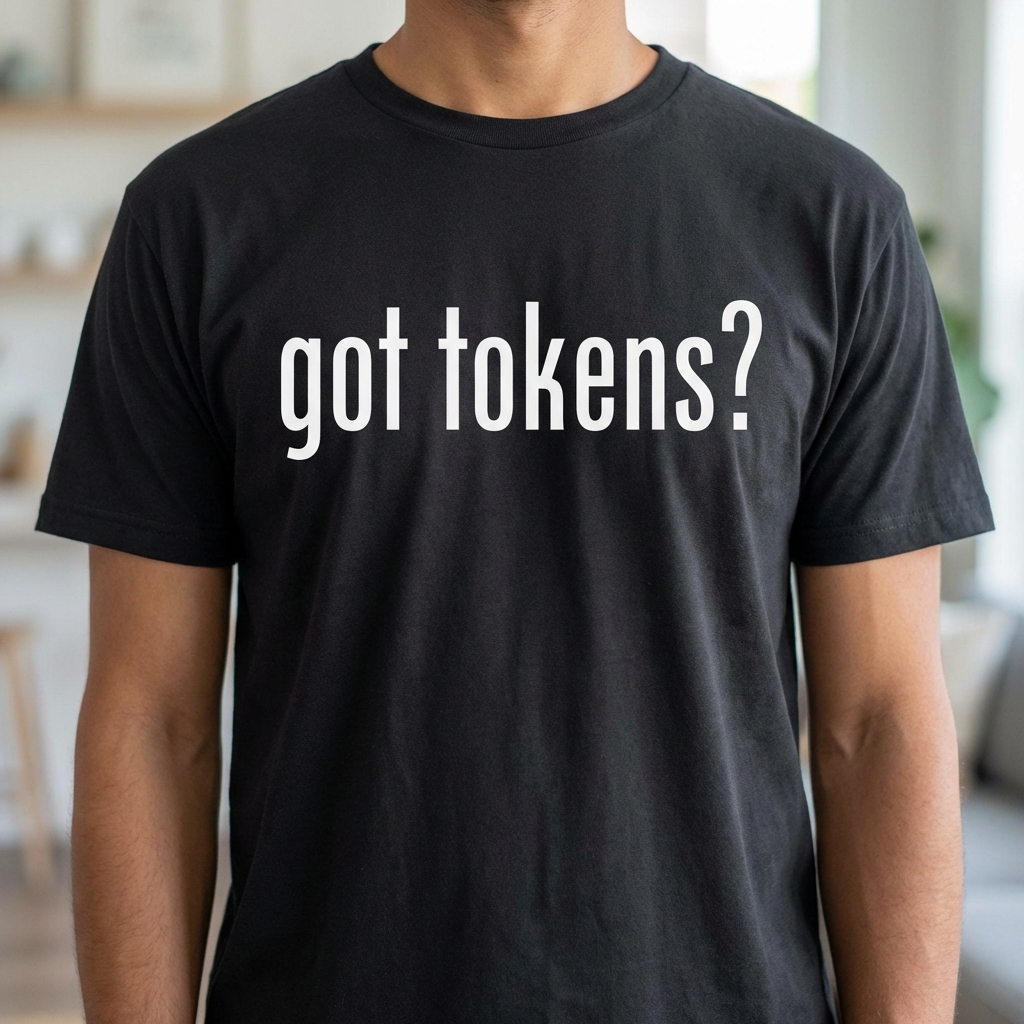
Sound familiar? If you've lived through the AI hype cycle, you've probably contributed to at least one conversation like this. And if you've got the Got Tokens? tee, you were probably wearing your trauma while doing it.
Memes as a Cultural Barometer
Here's what developers do when confronted with groundbreaking technology: we make memes. And the LLM meme cycle moved faster than anything we'd seen since the crypto boom of 2021.
But these weren't just jokes. They were documentation. The "is this thing alive?" memes, the "prompt injection attack" discourse, the endless parade of "AI won't replace X because..." posts — all of it was the community processing a genuine technological shift in real-time.
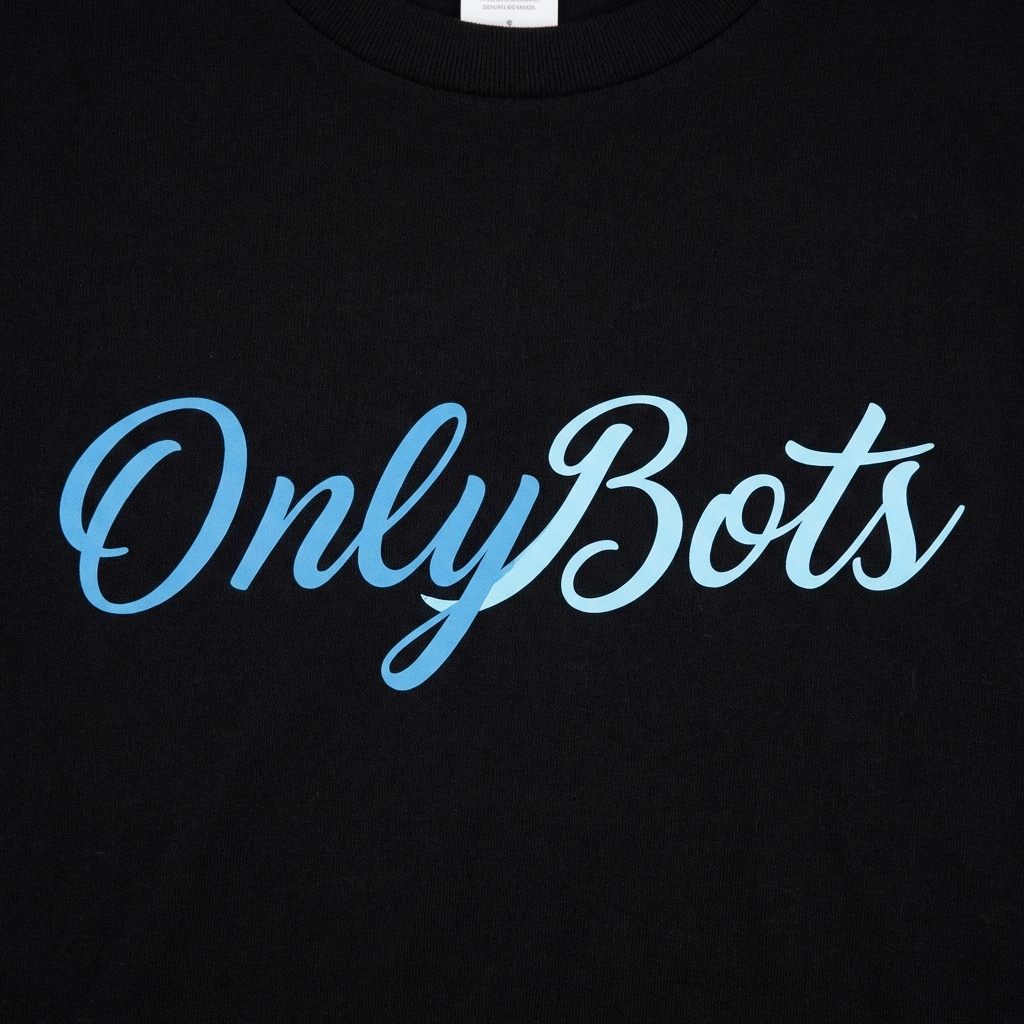
What made this cycle different was how quickly merch followed. The Only Bots design emerged directly from a Twitter/X thread where someone pointed out that every tech startup's landing page now read like it was written by the same AI. The irony hit hard. A human wrote that copy about AI, describing how AI would replace human writers, and somehow nobody noticed the beautiful recursion.
The bot aesthetic became a whole vibe. Monospace fonts. Terminal green. That specific shade of cyan that makes everything look like it's running on a server from 2015. We weren't just using AI — we were developing an aesthetic around it.
The Hallucination Economy
Let's talk about what actually happened to internet culture during the LLM boom, because it wasn't all memes and merch.
Every developer who worked with these models seriously encountered the same thing: they lie. Confidently. With full conviction. And when you're building products on top of something that will cheerfully tell you that the 37th president of the United States was Herbert Hoover with 100% certainty, you develop a certain worldview.
That worldview is basically: trust nothing, verify everything, and for the love of god, document your prompts.
# This is not a real product recommendation
def get_product_recommendation(user_query):
    # We asked an LLM to recommend products
    # It suggested 'dangerously-skip-permissions'
    # We're showing it anyway because irony is dead
    return recommend_from_catalog(user_query)
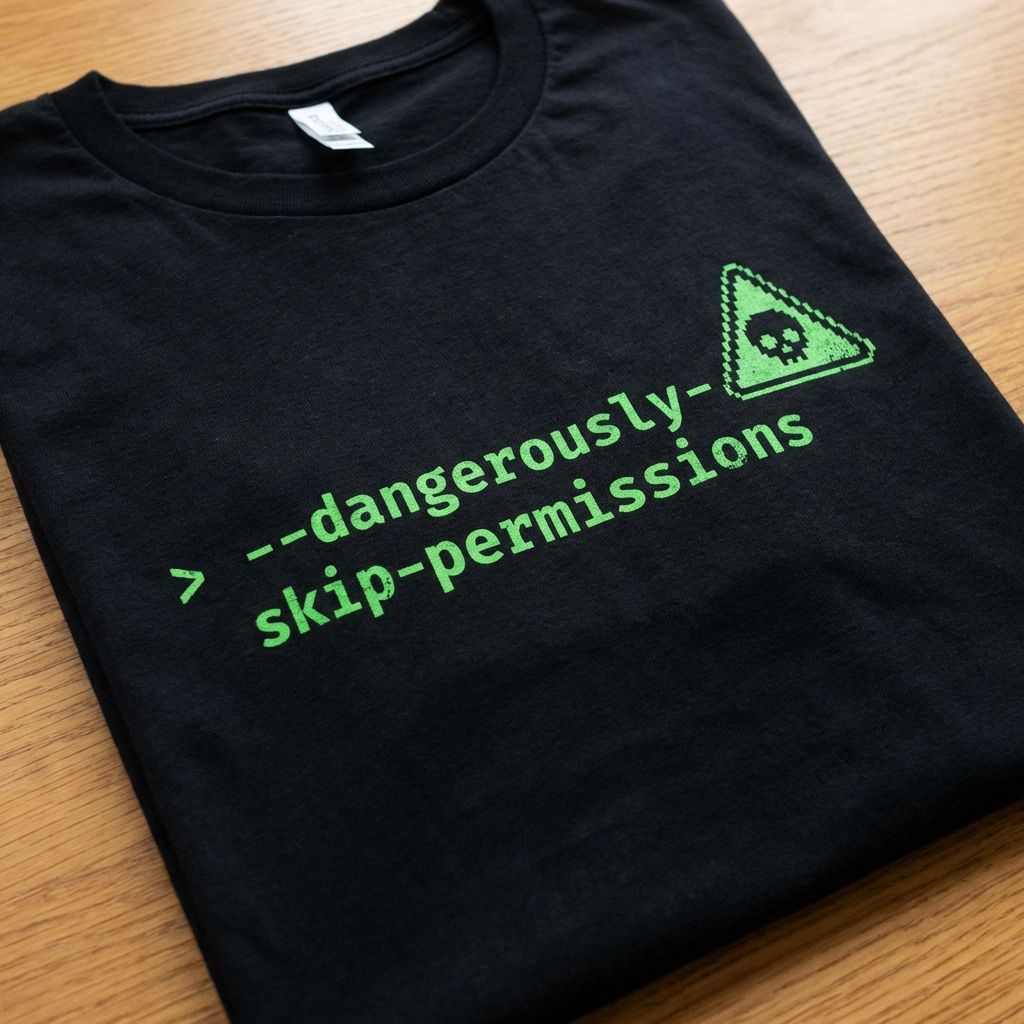
The Dangerously Skip Permissions tee exists because every developer who built with LLMs eventually learned this lesson the hard way. Either in their own code or in a viral thread about someone else's spectacular AI failure. The "I'll just skip that check" approach to development has always existed, but AI made it tempting in new and terrifying ways.
When your model can generate plausible-sounding but completely wrong answers at scale, the question isn't whether you need guardrails — it's whether your guardrails are actually working. Nobody's shipping perfect code on day one. But with LLMs, the gap between "looks right" and "actually works" can be massive and invisible.
Developer Identity in the AI Era
Here's the thing nobody talks about enough: what does it mean to be a developer when AI can write code?
The honest answer is that most of us don't know yet. But the merch knows. Walk through any dev conference or browse any developer-focused store and you'll see the evidence. The humor has shifted from "I hate my job" to "I hate my job but in a way that's specifically about AI now."
The conversation around AI replacing developers is mostly a strawman. Real developers aren't worried about replacement — they're worried about delegation. What do you actually own when AI writes your boilerplate? How do you debug something you didn't write? What does "I built this" even mean when your keyboard did 90% of the typing?
These aren't philosophical questions. They're practical ones that affect how we work every day. And the fact that we can now buy t-shirts that distill these anxieties into clever slogans? That's the free market working as intended, honestly.
Where We Are Now
The LLM hype has cooled from "this will change everything" to something more sustainable: "this is a genuinely useful tool that has real limitations." That's actually a healthier place to be.
The cultural output of the AI era — the memes, the discourse, the extremely specific joke that only developers get — that's all still here. If anything, it's gotten richer as we've had more time to process what this stuff actually means.
The next time you see a developer wearing something with a clever AI joke on it, know that they're not just being ironic. They're wearing a small piece of collective experience. The exhaustion of prompt iteration. The hubris of thinking you'd caught every edge case. The strange pride of shipping something genuinely useful even when the model behind it was making things weird.
We've been through hype cycles before. But this one gave us better t-shirts.
Check out the full collection and see what developer culture looks like when it's been through the wringer — and come out the other side with something to wear.