Linux Humor — A Love Letter to the Command Line
From kernel panics to 'sudo rm -rf / --no-preserve-root' — why Linux users are the funniest people in tech, and why that's not an accident.
There's a particular kind of person who, when faced with a graphical interface, will instinctively open a terminal instead. This is not a malfunction. This is a lifestyle choice. And honestly? It's made us funnier.
Linux users have developed an entire comedy ecosystem around the command line, kernel panics, and the particular brand of hubris that comes from running sudo on a production server at 2 AM. It's not just humor — it's a coping mechanism, a culture, and increasingly, a fashion statement worn on t-shirts like the ones over at NERDMERCH.
The Terminal Is Our Comedy Club
Every operating system has its quirks, but Linux has turned those quirks into an art form. When your entire existence revolves around typing commands into a black box, you start finding comedy in places other people didn't know existed.
Consider the humble grep. For most people, grep is just a search tool. For Linux users, grep is a running joke about how we're always searching for that one log file that's causing everything to explode. The more you use Linux, the more grep appears in your dreams.
ps aux | grep -v grep | grep "something broken" | awk '{print $2}' | xargs kill -9That's not a command. That's a haiku. A very aggressive, slightly panicked haiku written at 3 AM before a deployment.
The culture of Linux humor is deeply tied to the culture of Linux work. When your job involves wrangling configuration files, debugging segmentation faults, and explaining to non-technical stakeholders why the server is "fine, it's just doing something", comedy becomes essential. You laugh so you don't cry. You make t-shirts about it. You wear them to conferences where other people laugh because they get it.
Kernel Panics and Existential Crises
Nothing unites Linux users quite like a kernel panic. It's the moment your otherwise-stable system decides that everything you knew was wrong, and it's taking the data with it.
The comedy of kernel panics isn't just in the error messages — it's in the response. A Windows user sees a blue screen and calls support. A macOS user sees a kernel panic and schedules a Genius Bar appointment. A Linux user sees a kernel panic and immediately screenshots it for Reddit, because "look at this absolute unit of a stack trace" is peak content.
The real humor, though, is in what comes after. You reboot. You run dmesg. You grep through logs looking for anything that might explain what just happened. And ninety percent of the time, you never find out. The kernel panicked, and it took its secrets to the digital afterlife. You love it anyway.
This is the Linux way: unconditional love for a system that will absolutely one-click your entire project if you mistype a flag.
Permission Denied: A Tale as Old as Time
If you've never seen a "Permission denied" error, you haven't lived. Or more likely, you haven't tried to do anything interesting on a Linux system.
$ chmod 777 everything.sh
bash: ./everything.sh: Permission denied
Oh, the irony. You gave yourself permission, and the system said no anyway. This is Linux telling you that just because you can do something doesn't mean you should. It's a philosopher. A digital Socrates with a sense of humor.
The real art form is when you get Permission denied and your solution is to just keep adding sudo until something works:
sudo chmod 777 /usr
sudo rm -rf /var/log/old
sudo mv /important /tmp
# It worked but I'm not proud
This is the dark side of Linux humor — we know it's dangerous, we do it anyway, and we make t-shirts about it. The rm-rf-danger shirt exists because we've all been there. We've all typed rm -rf with a space in the wrong place and felt our soul leave our body for a brief, horrible moment before ctrl+C saved us.
The Joke That Only Works If You've Suffered
Here's the thing about Linux humor: it requires buy-in. You can't appreciate the joke about systemd if you've never spent six hours trying to figure out why your service won't start. You can't laugh at "it works on my machine" if you've never deployed to production and watched it immediately break.
Linux humor is inside humor. It's developer humor. And that's what makes it special.
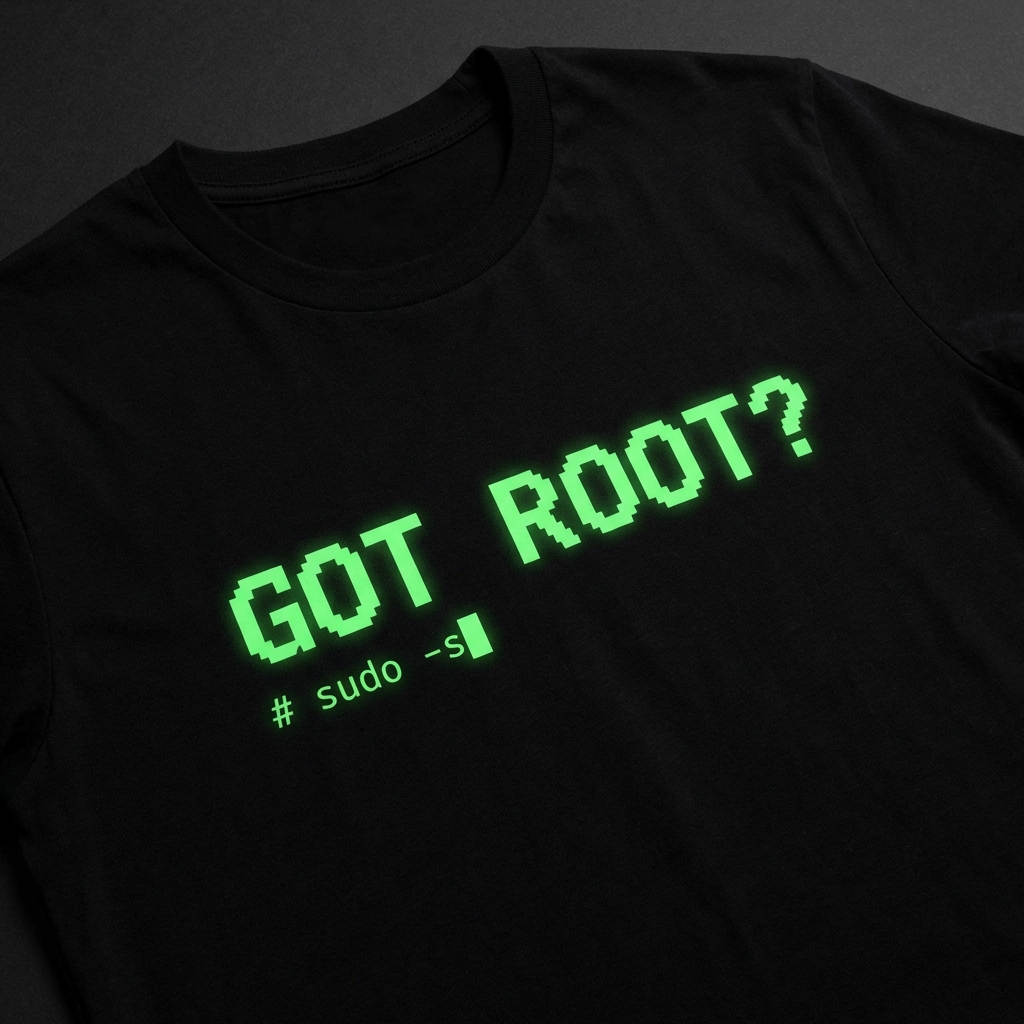
When you wear a t-shirt that says got-root, you're not just making a joke about system administration — you're signaling to every other Linux user in the room: "I understand. I've been there. I've typed the command that almost destroyed everything and lived to tell the tale."
This is why developer communities have such strong humor cultures. We bond over shared suffering. We laugh at the things that hurt us. And we do it in public, on t-shirts, because hiding our scars is not the Linux way.
Why the Command Line Is Actually Funny
At its core, the command line is absurd. We're in 2026, we have AI that can generate entire applications from prompts, and yet millions of developers still open a terminal and type ls -la instead of just looking at the folder icon. We're not doing this because it's efficient. We're doing it because it feels right.
The humor in the command line comes from this deliberate choice to engage with technology on its own terms. When you type curl https://example.com | jq '.data' | grep something, you're not just retrieving information — you're performing a ritual. You're engaging with the machine in a language it understands, and in exchange, the machine does what you ask. Mostly. Sometimes.
The comedy is in the gap between intention and outcome. You think you're typing a command. You're actually casting a spell, and the spell only works if your syntax is perfect and the stars are aligned and the server you're hitting isn't having a bad day.
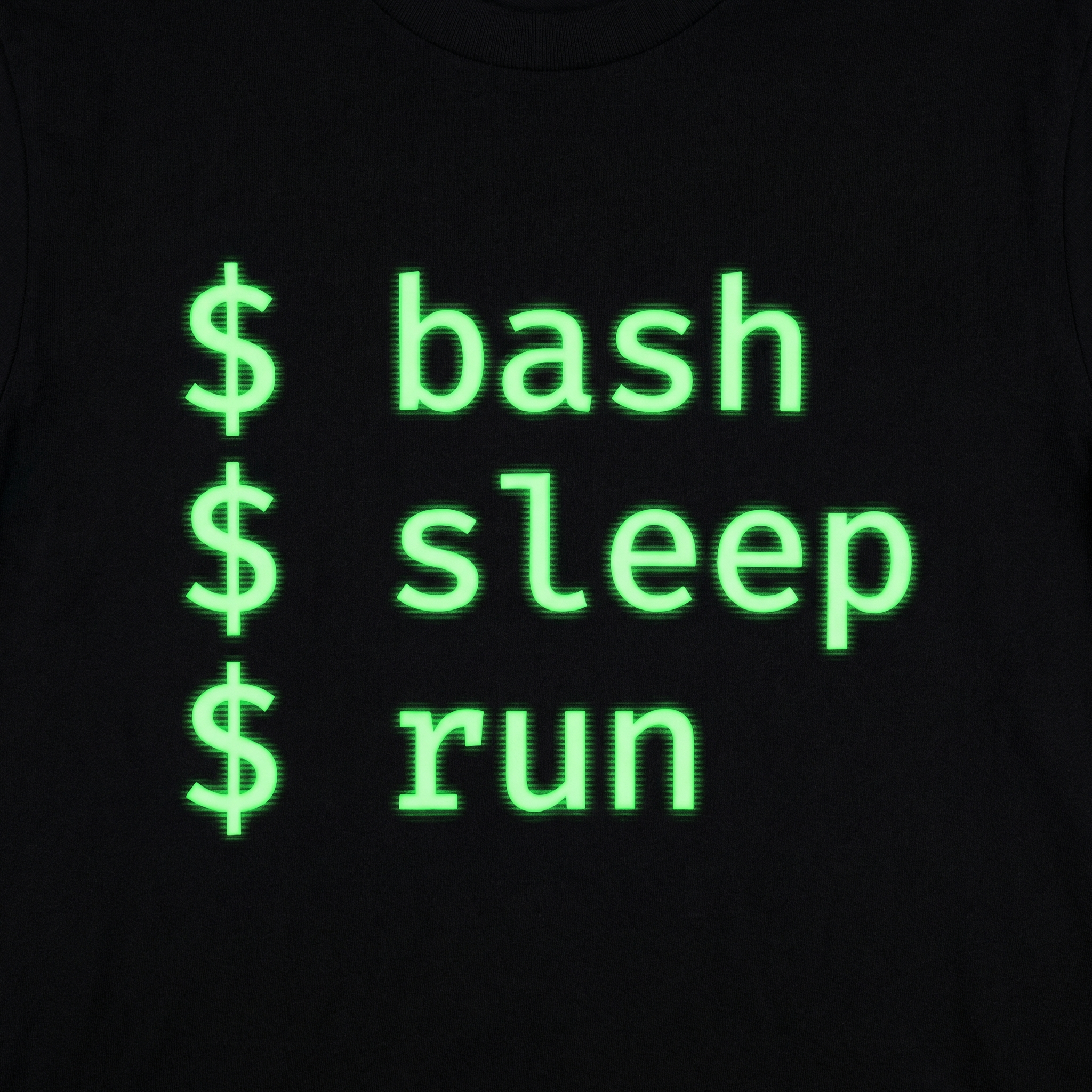
Linux users laugh at this gap constantly. We laugh when sudo asks for a password and we know it's just for show. We laugh when man pages tell us to RTFM but we still don't understand. We laugh when bash-sleep-run becomes a lifestyle metaphor for "I'll deal with it tomorrow."
The Love Letter
So here's the thing: Linux humor isn't just jokes. It's love.
Every rm -rf joke is a testament to the fact that we've learned from our mistakes. Every kernel panic meme is a celebration of resilience. Every "Permission denied" punchline is acknowledgment that some doors are closed for a reason, and that's okay.
We joke about Linux because we love Linux. We make t-shirts about the command line because the command line is home. When you've spent ten thousand hours learning a system, when you've debugged it at 4 AM and celebrated with it when things finally worked, you develop a relationship with it. And like any relationship, it comes with humor.
The Linux user who makes jokes about sudo rm -rf isn't being reckless. They're being affectionate. The person who wears a shirt about "got root" is saying: this operating system and I, we understand each other. It frustrates me, confuses me, and occasionally destroys my work — and I love it anyway.
That's the real joke. That's the real love letter.
Now if you'll excuse me, I need to go run apt update and pretend I understand what's happening with all those dependency resolutions. Wish me luck.