Why sudo Jokes Will Never Die
From the legendary xkcd comic to your terminal's command history, the sudo joke has survived decades of tech evolution—and here's why it always will.
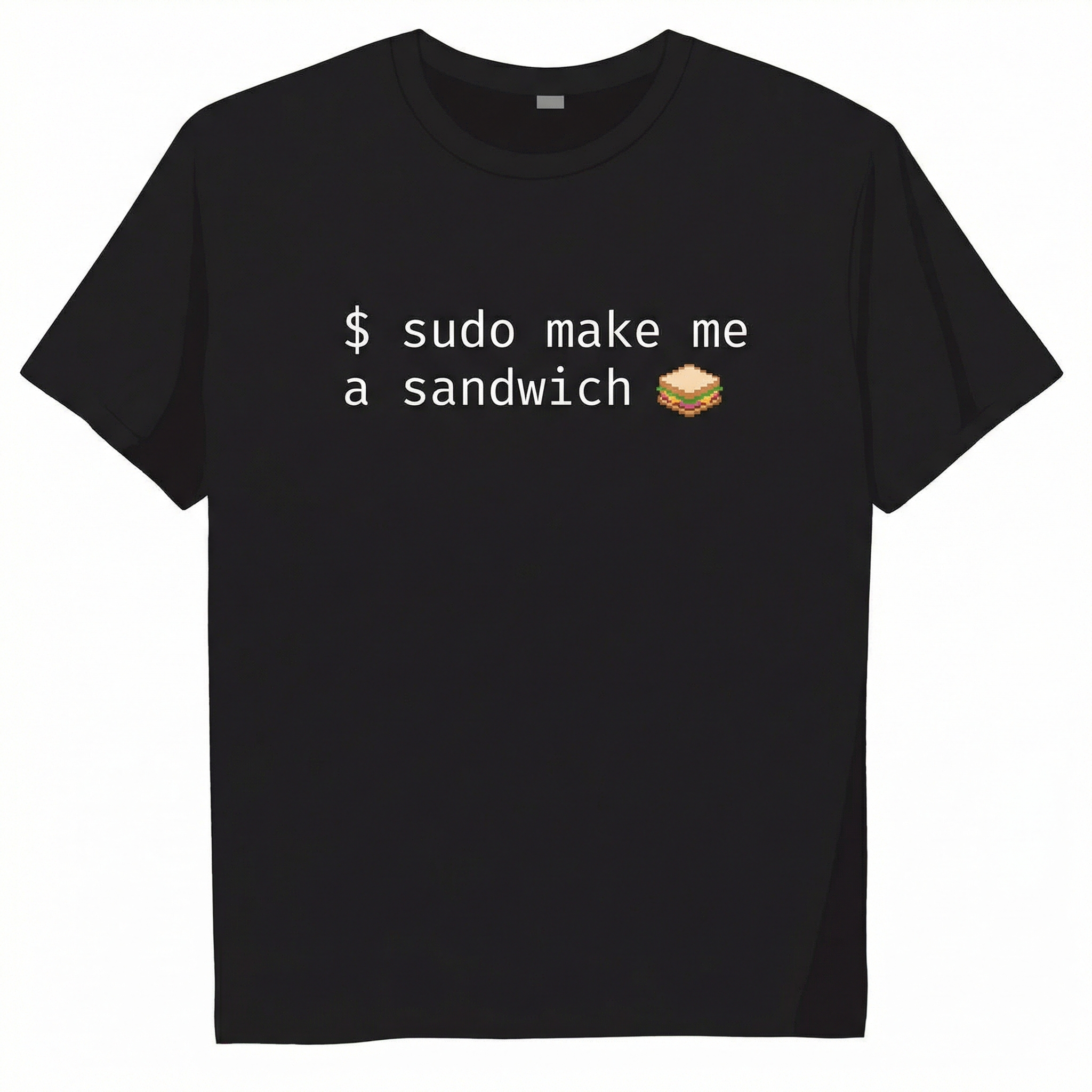
Let's be honest: if you've spent more than a week in tech, you've heard the sudo sandwich joke. Maybe you first saw it scrawled on a whiteboard in some CS department. Maybe a senior dev dropped it during your first week at a new job. Maybe you've got the sudo-sandwich t-shirt hanging in your closet right now, serving as a badge of honor.
And yet, decades after it first appeared, the sudo joke is still alive, still funny, and still everywhere.
The xkcd Comic That Started It All
In 2007, Randall Monroe published what would become one of the most iconic comics in developer culture. The strip shows a conversation between a narrator and what appears to be a sandwich:
Narrator: I'm having a grilled cheese sandwich.
Sandwich: I am capable of taking down your entire system with a single command.
Narrator: I'm having a grilled cheese sandwich.
The humor is absurd on its surface—treating a sandwich as an all-powerful administrator—but it works because it plays on a very real developer experience. We interact with sudo constantly. It's the prefix to commands that could theoretically destroy everything. And sometimes, we feel just a little bit like we're negotiating with something far more powerful than ourselves.
This comic spawned a thousand variations, countless memes, and an entire subgenre of developer humor that hasn't slowed down in nearly 20 years. Why? Because it perfectly captures the relationship between developers and administrative power.
Why Sudo Is Basically a Magic Word
Think about it. In most computing environments, sudo is the equivalent of saying "I am the law" before doing something that could go very wrong. You type:
sudo rm -rf / --no-preserve-rootAnd for a brief, terrifying moment, you're essentially a god. The computer asks "are you sure?" and you say "yes" (or you script it to skip the prompt entirely, which is its own kind of hubris).
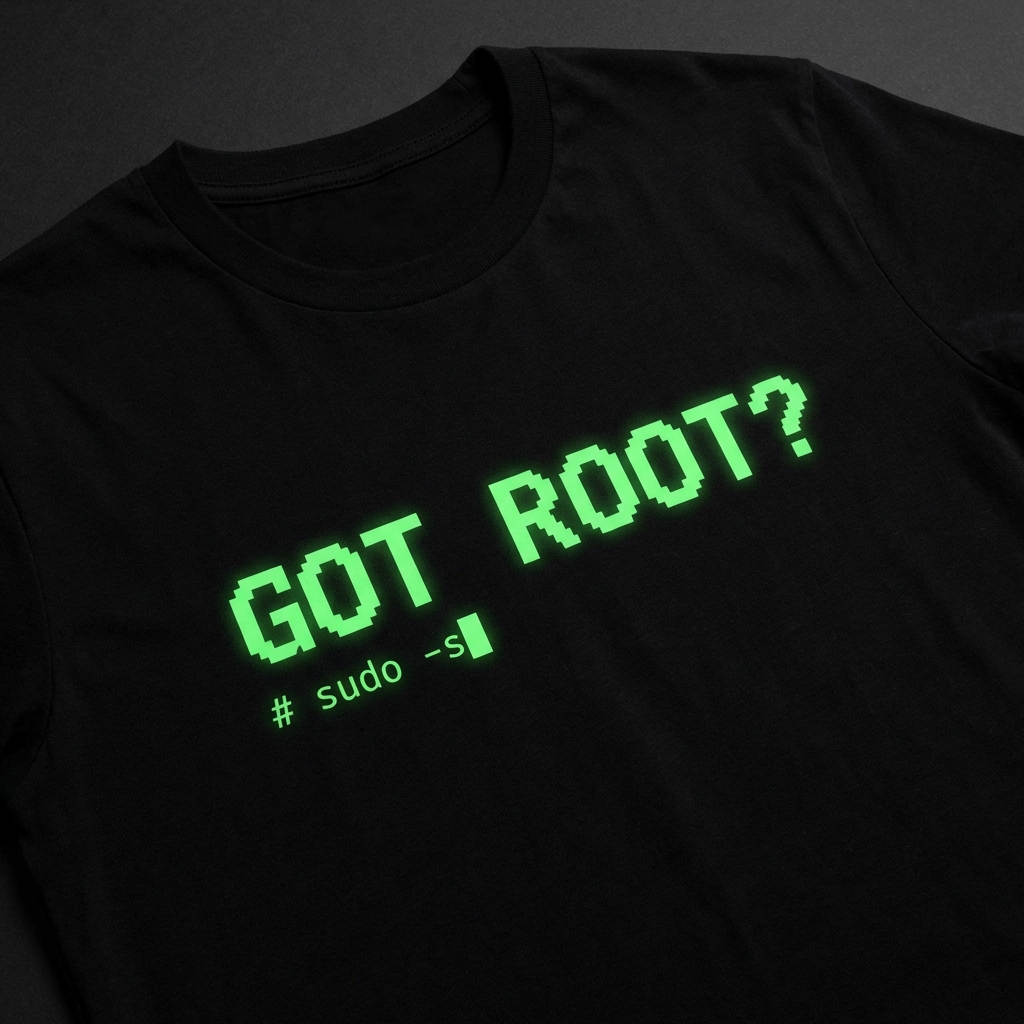
This is why the got-root concept resonates so deeply. It's not just about Linux permissions—it's about that moment of power when you realize you have complete control over a machine. Every developer remembers their first time accidentally running a command as root and watching the cascading consequences unfold. It's a rite of passage.
The joke works because sudo represents both ultimate power and ultimate responsibility. You can do anything, but now you have to live with what you do. That's basically the entire developer experience in two words.
The Grammar of Sudo Humor
What makes sudo jokes so endlessly recyclable is their underlying structure: a mundane scenario + an absurd claim of administrative power = comedy.
This format is incredibly flexible. You can substitute anything for the mundane scenario and anything for the power claim, and it still works:
- "I'm ordering pizza." "I could nuke your infrastructure from here."
- "My code is compiling." "I have root access to the production database."
- "I'm wearing my new sudo-sandwich tee." "I could delete the entire internet."
See? Works every time. The formula is so durable because it mirrors our actual relationship with power in computing. We spend most of our time doing incredibly mundane things—writing emails, debugging trivial issues, staring at Slack—interspersed with moments where we suddenly hold life-or-death power over systems. The sudo joke is really just a compressed acknowledgment of that duality.
It Helps That Everyone Gets Burned by Root Access
The sudo joke has survived because it's not mean-spirited or exclusionary. Nobody is the punchline. Instead, the joke is about the absurdity of power itself, and we've all been both the person wielding it and the person cleaning up after someone who wielded it poorly.
Ask any sysadmin about rm -rf accidents, and you'll hear stories that could make a horror movie look tame. The infamous rm-rf-danger shirt exists because we've all heard about (or personally committed) some variation of:
rm -rf ./node_modulesWait, was that the right directory? The 3 AM panic as you try to reconstruct what happened, the sick feeling in your stomach, the prayers to whatever tech deity you don't believe in—all of that is baked into the joke.
And that's what makes it universally relatable. The sudo joke isn't about mocking newbies or celebrating elites. It's about the shared human experience of having power you don't fully understand, using it anyway, and somehow surviving.
The Joke Grows With You
Here's the real secret: the sudo joke gets funnier as your career progresses. When you're a junior dev, the joke is about the theoretical danger of powerful commands. When you're a senior engineer, the joke is about the actual damage you've seen, the near-misses you've had, the time you almost deleted production on a Friday afternoon.
A new developer laughs at "I could destroy everything" as an abstract concept. An experienced developer laughs at it because they have a specific memory of almost doing exactly that, and the adrenaline spike from that memory makes the joke viscerally funny.
This is why developer humor often doesn't land with non-developers. The sudo joke requires context to fully appreciate. You need to have felt that moment where you typed a command, hit enter, and then spent the next ten minutes of your life in cold sweat hoping you had a backup. Without that lived experience, it's just a cartoon about a sandwich claiming to be powerful.
Where Do We Go From Here
The sudo joke isn't going anywhere. As long as there are developers, there will be root access, and there will be the moment of hesitation before you press enter on a command that could end everything. The format will evolve—new references, new contexts, new shirt designs—but the core humor will remain.
Maybe in twenty years, developers will be laughing at quantum computing equivalents of the sudo joke. "I'm ordering lunch." "I could collapse your wave function across seventeen dimensions." But I suspect we'll still be using the word "sudo" in some form, and we'll still be wearing shirts with sandwiches on them, and we'll still be making the same tired joke because it never stops being funny.
Some jokes are just built to last. The sudo sandwich joke has survived platform shifts, programming language trends, and multiple generations of hardware. It's survived the rise of containers, the cloud, and serverless. It's survived every attempt by well-meaning managers to add guardrails around administrative access.
Why? Because at the end of the day, every developer knows the truth that the joke encodes: we're all just one command away from disaster, and we keep typing anyway. That's not just humor—that's the job description.
So next time you type sudo and feel that little flutter of power and terror, remember: you're participating in a tradition that goes back decades. You are part of a lineage of developers who have stood where you stand, felt what you feel, and made the same joke because what else can you do?
The sandwich remains undefeated. Long may it reign.